



Why Does Anyone Still Live on Comino?
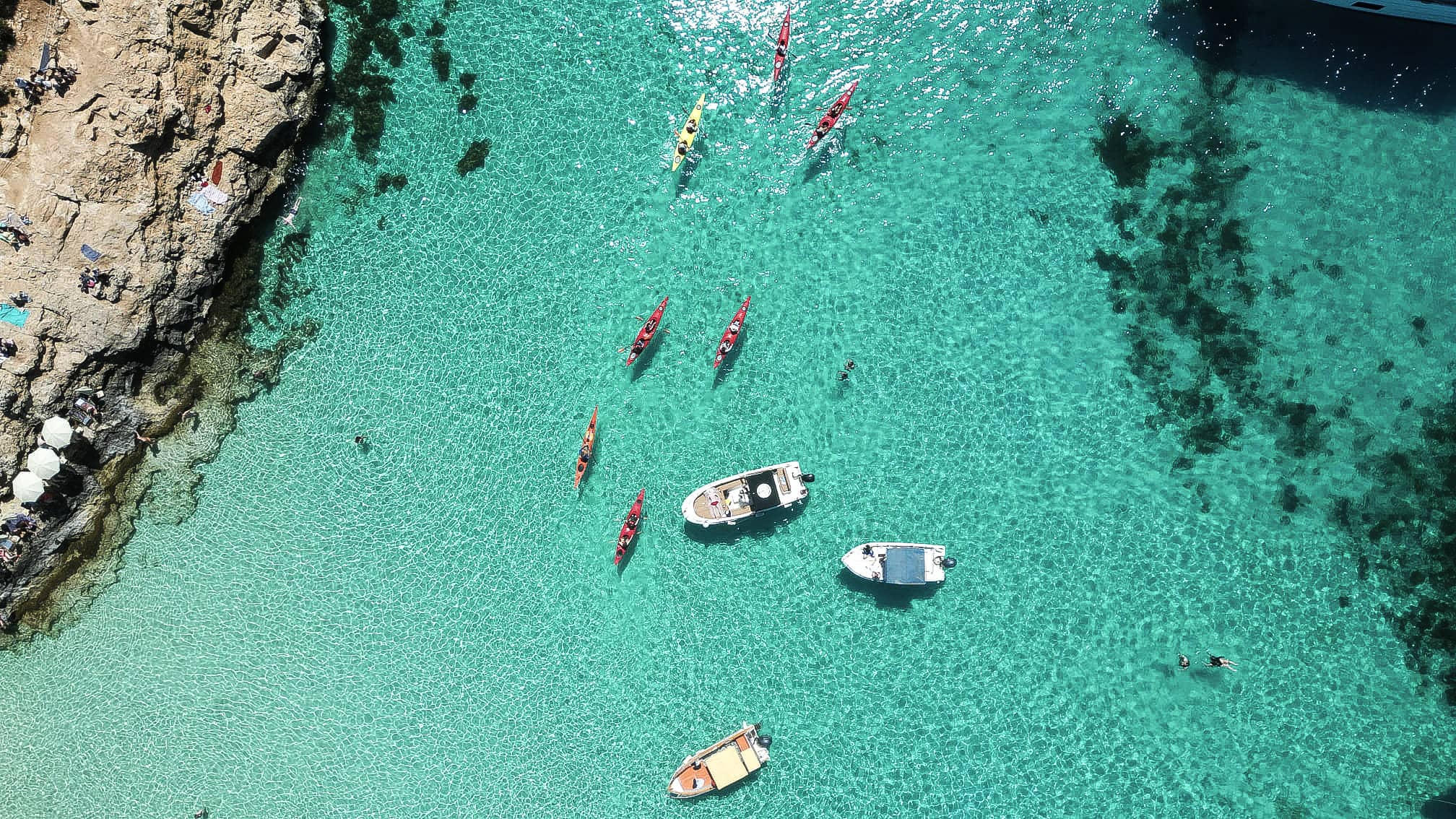
Every summer day, thousands of people arrive on Comino.
They come by ferry from Ċirkewwa. They come by private boat from Mġarr. They anchor in the Blue Lagoon, swim in the Crystal Lagoon, walk to the cave entrances and the viewpoints, eat from the kiosks, and lie in the sun.
And then, as the afternoon turns toward evening, they leave. The ferries take them back. The private boats return to harbour. The floating pontoons bob gently in water that is suddenly, dramatically quieter.
By nightfall, Comino is almost empty.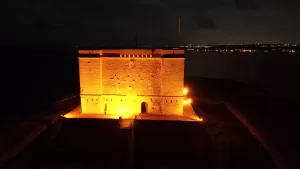
Almost.
One man stays. He has been staying for 75 years. He was brought to this island when he was one week old, in 1951, and he has never truly left.
The question is simple. Why?
Why does anyone still live on Comino — an island with no shop, no hospital, no school, no petrol station, no road connections, no neighbours — when everyone else who was ever there has long since gone?
The answer is not simple at all. But it is worth understanding. Because Salvu Vella is not just a curious footnote in a travel guide. He is the last chapter of a story that has been running for over a hundred years. And when that chapter ends, nobody knows what comes next.
Everyone Else Left — Here is Why
To understand why Salvu stayed, you first need to understand why everyone else left.
Comino once had a real community. In September 1931, eight farming families lived on the island — the Vellas, the Borgs, the Saids, the Gaucis, and others. They farmed the valleys, maintained the rubble walls, tended the wells, and built a life on a small island between two larger ones.
The Comino Farming Company — which had employed them all — relinquished its lease in 1960. The economic reason to be on the island disappeared. One by one, the families made their decisions.
Some got married and moved to Gozo or Malta to be with their partners. Some followed family members who had already left — emigrating to Australia, to England, to places where work was available and life was easier. Salvu’s brother Vincent went to live in Melbourne, Australia. Others settled in Gozo, in St Julian’s, in towns across Malta.
Some simply tried their luck elsewhere — the way young people from small communities always have, in every generation, in every corner of the world.
And the older ones — the ones who had been on the island the longest, who remembered the farming years and the hotel opening and the school — some of them died. They are buried now in the cemetery at Għajnsielem in Gozo, plot 23 and 24 — the community of Comino, finally settled together on the larger island across the water.
The island itself belongs to the government. Comino is public land — a nature reserve, open to everyone, leased to nobody. You cannot buy a plot there. You cannot build a house. The government will not grant a new lease for residential use because Comino is, in every practical sense, one large public park surrounded by sea. The community that once lived there did so under arrangements that no longer exist and cannot be recreated.
Which is why, when everyone left, nobody new moved in.
Except that Salvu was already there. And Salvu did not leave.
Why He Stayed — In His Own Words
Salvu Vella was practically born on Comino. He has spent every day of his life there. He knows it better than he knows anything else — better than he knows any other place, any other landscape, any other body of water.
It is all he knows. And he loves it.
That is the answer. It is not complicated. It does not require a dramatic explanation about isolation or stubbornness or an inability to adapt to modern life. Salvu stayed because Comino is his home in the most complete and irreplaceable sense of that word — not a place he chose, but a place that is simply part of what he is.
He loves the quiet. He loves the animals. He loves the sea in the early morning before anyone else is on it. He loves the garigue in April when the thyme turns purple and the bees follow the flowers across the whole island. He loves knowing every path, every well, every rubble wall, every current in every bay.
He is at peace there. Genuinely, completely at peace — in a way that very few people ever achieve anywhere.
It is a remarkable thing to witness. And it is worth admiring.
What Nobody Else Was Willing to Live Without
Living on Comino costs things that most people are not willing to give up.
No shop. Everything Salvu needs comes by boat — brought by the ferry company, by the Snack Box kiosk operators at the Blue Lagoon, by friends who remember to bring things when they cross. The Cutajar family shop that served the island from 1927 closed decades ago. There is nothing to replace it.
No hospital. When Salvu’s brother Anglu became ill with kidney disease — spending years on dialysis, making regular trips to the mainland for treatment — the logistics of that illness from a remote island were enormous. Anglu died on 19 December 2020. Living with serious illness on Comino is a different proposition from living with it anywhere else.
No neighbours. Veggie — Salvu’s cousin — spends time on the island when she can. But Salvu is, for long stretches of the year, essentially alone. No one to drop in for coffee. No one to call over the fence. The nearest community is a boat ride away.
No infrastructure. What breaks, Salvu fixes. What falls, Salvu rebuilds. The rubble walls, the paths, the water systems, the solar panels — all of it is his responsibility because there is nobody else.
Most people, confronted with this list, would choose a flat in Sliema. Salvu has lived with all of it for 75 years and considers himself fortunate.
Comino in Winter — The Island Almost Nobody Sees
To truly understand why someone would stay on Comino, you need to see it in winter.
The summer version of Comino — 4,000 visitors on the Blue Lagoon shore, ferries running hourly, kiosks selling food and drinks — is spectacular in its way. But it is not the island. It is what the island becomes for five months of the year.
The winter version is something else entirely.
The ferries slow down. The kiosks close. The floating pontoons come out of the water. The Blue Lagoon — which in August holds thousands of people — becomes almost completely silent. The limestone cliffs and the turquoise water are still there, unchanged. But the noise is gone.
And when the noise is gone, the island reveals itself.
Nature takes over. A little rain is enough to turn the garigue green — and Comino in winter green is extraordinary, a richness of colour that the dry summer landscape never quite achieves. The migration season brings more birds than the island sees at any other time of year. Partridges run through the paths. The chickens roam more freely. The rabbits are more visible. The whole island feels more alive, not less, for the absence of the crowds.
By March, the wild thyme begins to bloom. The whole island starts to turn purple — slowly at first, then everywhere at once. The bee colonies grow strong and begin to divide, sending new swarms out across the garigue. Standing on Comino in March, watching the thyme come into flower and the bees working the new blossoms — it gives you a feeling that is very specific and very rare.
It makes you feel the way Malta and Gozo must have felt long, long ago. Before the cars. Before the apartment blocks. Before the tourists. Dirt paths. Empty beaches. The Mediterranean slow and quiet and utterly itself.
Salvu sees this every year. He has seen it every year for 75 years.
That is what everyone else gave up when they left.
Why Nobody New Can Move There
People sometimes ask — why doesn’t someone else move to Comino? Why is Salvu the last one rather than the first of a new generation?
The answer is straightforward. Comino is owned by the government of Malta. It is designated as a nature reserve and public land — a place where everyone can go, where nobody can build, and where no new residential leases are granted.
The families who lived there did so under arrangements made during the farming company era and the hotel years — arrangements that reflected a different time and a different relationship between the island and the state. Those arrangements no longer exist.
Today, Comino is one large public park. Open to all. Belonging to none. Salvu’s right to live there is tied to his family’s century-long presence — a presence that will not be replicated when he is gone.
The next permanent resident of Comino, if there ever is one, does not yet exist. And given the legal status of the island, it is not clear they ever will.
What Happens When Salvu Is Gone
Comino will never be the same without Salvu Vella.
That is not a sentimental statement. It is a practical one.
Salvu knows where every well is — the ancient oval-shaped well at Santa Marija Bay that may date to Roman times, the wells at Wied il-Aħmar and Il-Lifrat, the bore holes drilled by the Water Services when he and Anglu worked there for decades. He knows which rubble walls need watching after heavy rain. He knows the state of the paths, the condition of the garigue, the behaviour of the bird populations he has been monitoring for half a century.
He does the daily drone survey that tells him if anything has changed. He does the afternoon patrol by electric buggy that checks every bay and every path. He maintains the solar water pump that keeps the animal pond filled. He fixes what breaks, rebuilds what falls, tends what would otherwise be abandoned.
When Salvu is gone, nobody will do these things. There is no replacement for 75 years of accumulated knowledge of one specific place. It cannot be learned from a book or a map. It lives in one person, built up over a lifetime of daily presence.
The island will still be beautiful. The Blue Lagoon will still be extraordinary. The Crystal Lagoon and the caves and the Battery cannons and the tower will all still be there.
But something will be missing. Something that most of the thousands of visitors who arrive every summer day never even know is present.
How Salvu Gets His Food
Food on an island with no shop requires planning — and a good network of people who care about you.
The ferries and kiosk operators who cross to Comino regularly are part of Salvu’s practical support system. If he needs something from the mainland, he asks — and they bring it. It is a simple arrangement built on years of mutual respect. Salvu has always been the kind of person who helps everyone around him. In return, everyone around him is willing to help him.
In earlier years, when Marija, Veggie, and Anglu were all still on the island, the community was more self-sufficient. More hands meant more land tended, more crops grown, more food produced on the island itself. Between them they kept larger vegetable plots, grew more fruit, and relied less on anything coming from the mainland.
Now that Salvu is largely on his own, he cannot tend all the crops by himself. Some land has returned to garigue. He still grows what he can — vegetables, herbs, the organic produce he has always been proud of. He still fishes when conditions allow. But for the rest, supplies come across by boat from Malta and Gozo.
The key to making this work is simple: Salvu always buys more than he immediately needs. His stores are always full. If the ferries cannot cross for a week — bad weather, rough seas, an unexpected gap in service — he has enough in stock to manage comfortably. He plans for the island life rather than hoping it will cooperate.
It is the same practical intelligence he brings to everything else on Comino. Think ahead. Build in redundancy. Never be caught short. 🚤
The Gift of Knowing He is There
Every time we pass Comino on the boat — the Blue Lagoon channel, the Santa Marija Bay slipway, the garigue above Il-Lifrat — we know Salvu is somewhere on that island.
Flying his drone. Working in the garage. Driving the buggy along the afternoon patrol route. Checking that the water pump is running, that the walls are standing, that the animals are fed, that the island is as it should be.
He is the reason Comino is not just a beautiful place. He is the reason it is a living one.
Visit Comino by private boat. Swim in the Blue Lagoon and the Crystal Lagoon. Walk ashore at Santa Marija Bay and take the path up through the wild thyme to the viewpoint. Look at the island around you — the old walls, the wells, the garigue, the birds.
And know that a man has been taking care of all of it, every single day, for 75 years. Because he loves it. Because it is all he knows. Because it is, in every sense that matters, his.
Book a private Comino boat tour here.
For the complete story of Salvu Vella, read here.
For who lives on Comino today, read here.
For the complete Comino guide, read here.
How Salvu Gets His Food
Food on an island with no shop requires planning — and a good network of people who care about you.
The ferries and kiosk operators who cross to Comino regularly are part of Salvu’s practical support system. If he needs something from the mainland, he asks — and they bring it. It is a simple arrangement built on years of mutual respect. Salvu has always been the kind of person who helps everyone around him. In return, everyone around him is willing to help him.
In earlier years, when Marija, Veggie, and Anglu were all still on the island, the community was more self-sufficient. More hands meant more land tended, more crops grown, more food produced on the island itself. Between them they kept larger vegetable plots, grew more fruit, and relied less on anything coming from the mainland.
Now that Salvu is largely on his own, he cannot tend all the crops by himself. Some land has returned to garigue. He still grows what he can — vegetables, herbs, the organic produce he has always been proud of. He still fishes when conditions allow. But for the rest, supplies come across by boat from Malta and Gozo.
The key to making this work is simple: Salvu always buys more than he immediately needs. His stores are always full. If the ferries cannot cross for a week — bad weather, rough seas, an unexpected gap in service — he has enough in stock to manage comfortably. He plans for the island life rather than hoping it will cooperate.
It is the same practical intelligence he brings to everything else on Comino. Think ahead. Build in redundancy. Never be caught short. 🚤
Comino — Key Facts
| Island size | 3.5 square kilometres |
| Location | Between Malta and Gozo — Maltese archipelago |
| Ownership | Government of Malta — public land and nature reserve |
| Permanent residents 2026 | 1 — Salvu Vella |
| Last permanent resident | Salvu Vella — born 1951, on Comino since age one week |
| Family on Comino since | 1926 — three generations |
| Peak daily visitors | Up to 4,000 in peak summer season |
| Winter visitors | Near zero — island returns to silence |
| Population in 1799 | Approximately 150 |
| Population in 1881 | 33 |
| Population in 1931 | 8 farming families |
| Last farming company | Comino Farming Company — closed 1960 |
| Can new residents move there? | No — government land, no new residential leases granted |
| Where former residents are buried | Cemetery at Għajnsielem, Gozo — plot 23 and 24 |
| Nearest hospital | Gozo General Hospital — accessible only by boat |
| Nearest shop | None on island — last shop closed decades ago |
FAQ — Why Does Anyone Live on Comino Malta?
Why does someone still live on Comino?
Salvu Vella has lived on Comino since he was one week old in 1951. He stayed because Comino is simply his home — the only place he has ever known, and a place he genuinely loves. At 75, he remains the island’s only permanent resident.
Why did everyone else leave Comino?
The other families who lived on Comino left for various reasons — marriage, emigration to Australia or England, following family members who had already moved to Malta or Gozo. The Comino Farming Company that employed many of them closed in 1960, removing the main economic reason to stay. The older residents eventually died and are buried in the cemetery at Għajnsielem in Gozo.
Can anyone move to Comino?
No. Comino is government-owned public land — designated as a nature reserve where no new residential leases are granted. It is essentially one large public park surrounded by sea. Salvu’s right to live there is tied to his family’s century-long presence on the island, which cannot be replicated.
What is Comino like in winter?
In winter, Comino is quiet, green, and genuinely extraordinary. The migration season brings large numbers of birds. The garigue turns green with rainfall. By March, the wild thyme begins to bloom across the whole island. The Blue Lagoon, empty of tourists, is as clear and vivid as it ever gets. It gives a feeling of how Malta and Gozo must have felt long before modern tourism.
Is Salvu Vella lonely on Comino?
Salvu appears genuinely content on Comino — at peace with the quiet and the solitude in a way that is rare and worth admiring. His cousin Veggie spends time on the island when she can. For the rest, Salvu has his animals, his inventions, his daily work, and 75 years of knowledge of a place he loves.
What happens to Comino when Salvu Vella is gone?
The island will remain beautiful and accessible. But the accumulated knowledge Salvu holds — every well, every wall, every path, every bird population, every current in every bay — will be gone with him. Nobody else has lived on Comino long enough to replicate it. His daily maintenance of the island’s infrastructure and natural life has no obvious replacement.
Who owns Comino?
The Government of Malta owns Comino. It is designated as a nature reserve and public land — open to all visitors but not available for private residential development or lease.
Is it possible to stay overnight on Comino?
The Comino Hotel at Santa Marija Bay is currently closed for renovation. There is a designated camping area on the island. Most visitors arrive by day trip and return to Malta or Gozo in the evening.
Further Reading
- Salvu Vella — The Extraordinary Man of Comino
- Who Lives on Comino? The Last Residents
- The Forgotten Farming History of Comino
- The Secret History of Comino — Pirates, Knights and War
- The History of the Blue Lagoon Malta
- Abraham Abulafia — The Mystic Who Lived on Comino
- Comino Island Malta — Complete Guide 2026
- Blue Lagoon Malta — Complete Guide 2026
- Best Things To Do on Comino 2026
- Private Boat Tour Malta — Complete Guide
Tags: why does anyone live on Comino Malta, Salvu Vella Comino, last resident Comino Malta, living on Comino Malta, Comino island permanent resident, Comino Malta winter, life on Comino island, Comino nature reserve Malta, Comino government land Malta, Salvu Vella guardian Comino, Comino community history Malta, I Malta Boat Trips Comino story 🚤