



Blue Lagoon Malta 2026 FAQ – Everything You Need to Know
The Blue Lagoon in Malta is one of the most searched and talked-about places in the Mediterranean, but real, accurate information can be hard to find. This 2026 FAQ collects everything in one place: passes, prices, safety, wind, jellyfish, ferries, private boats, best times to visit, and more.
Whether you are coming on a ferry, big group tour, self-drive boat, jet ski, or private boat, this page helps you plan the perfect Blue Lagoon visit.
Top 10 Essential Blue Lagoon Questions (2026)
Where exactly is the Blue Lagoon in Malta?
Short Answer:
The Blue Lagoon lies between Comino and Cominotto, on the northwest side of Comino, surrounded by shallow turquoise water.
Expanded Answer:
The Blue Lagoon is located in the narrow 140-metre channel separating Comino from the tiny islet of Cominotto. The area is enclosed by limestone cliffs, sea caves, and a bright white sandy seabed that makes the water look neon blue in sunlight. Two small beaches sit on either side of the channel, and the lagoon is almost completely sheltered, which creates calm, clear, picture-perfect swimming conditions.
Do I need a Blue Lagoon Pass in 2026, and how does it work?
Short Answer:
Yes, you need a free Blue Lagoon Pass only if you plan to step on land; boat-only visitors do not need one.
Expanded Answer:
From May 2025 onwards, anyone who wants to go on land at the Blue Lagoon must register online for a free visitor pass. In 2026, you choose a time slot, enter your details, and receive a QR code by email; each email can register up to four people. On arrival, you show the QR code and receive a wristband for your time window (08:30–13:30, 13:30–17:30, or 17:30 onwards).
Travellers staying on a private boat and enjoying the lagoon from the water do not need a pass, because they are not disembarking on Comino.
What is the best way to visit the Blue Lagoon in 2026?
Short Answer:
The best way is by small private boat from Cirkewwa, which gives fast access, quiet swimming areas, and no need for a land pass.
Expanded Answer:
In 2026, you can reach the Blue Lagoon by ferry, big group tour, self-drive boat, jet ski safari, or private boat. Ferries are the cheapest but only drop you at the busy beach. Large boats are crowded and follow fixed routes.
A small private boat from Cirkewwa reaches the lagoon in about 10 minutes, anchors in the clearest turquoise water away from the shore, visits Crystal Lagoon and caves, and lets you swim straight off the boat with shade, ladders, and snorkel gear. Because you do not need to go on land, you also avoid the Blue Lagoon Pass process, queues, and deckchair hassle.
How much does it cost to visit the Blue Lagoon in 2026?
Short Answer:
In 2026, expect about €15 for a basic ferry, €35–€60 for group tours, and from around €289 per boat for a private trip.
Expanded Answer:
A standard round-trip ferry ticket from northern Malta costs about €15 per person. Full-day group tours with multiple stops typically range between €35 and €60, depending on departure point and inclusions. Small private boats start at around €289 per boat for a half-day, which becomes very good value when 4–8 people share the cost.
Ferry visitors should also budget for food, drinks, snorkel rental, and deckchairs (around €50+ per set). Private boat guests usually avoid most of these extras because they bring their own cold drinks, have shade and snorkels on board, and rarely need deckchairs on land.
How long does it take to get to the Blue Lagoon from Malta and Gozo?
Short Answer:
From Cirkewwa or Marfa it takes about 10–15 minutes; from Gozo’s Mgarr Harbour also around 10–15 minutes.
Expanded Answer:
In 2026, travel time depends entirely on where you start:
Cirkewwa / Marfa → Blue Lagoon: 10–15 minutes (fastest and closest)
Mgarr, Gozo → Blue Lagoon: about 10–15 minutes
Bugibba / St Paul’s Bay → Blue Lagoon: roughly 45 minutes
Sliema / Valletta → Blue Lagoon: about 70–90 minutes
Starting from northern Malta or from Gozo gives you far more time actually swimming and exploring, instead of cruising for hours each way.
When is the best time of day to visit the Blue Lagoon?
Short Answer:
In summer, the best times are 08:30–11:00 and after 16:00, when it is calmer and less crowded.
Expanded Answer:
Between 11:00 and 16:00, especially in July and August, the Blue Lagoon becomes extremely busy as ferries and big group tours arrive. For a relaxed experience, arrive early in the morning to enjoy calm water and quiet beaches, or visit later in the afternoon when many boats leave and the light becomes warmer for photos.
If you visit with a private boat, you can enjoy the Blue Lagoon at these quieter times and then move to Crystal Lagoon, Cominotto Reef, or Gozo’s bays when the beach becomes crowded.
What is the best month to visit the Blue Lagoon?
Short Answer:
May, June, September, and October offer the best mix of warm water, good weather, and fewer crowds.
Expanded Answer:
These shoulder months give warm, swimmable water, strong colour, and fewer people than high summer. July and August have the warmest sea but also the biggest crowds and highest on-island costs. Many travellers still choose peak season but improve the experience by using a private boat, which avoids the packed beach and anchors in quieter sections.
From November to April, the lagoon is much less crowded but the water is cooler and weather conditions are less predictable.
Is the Blue Lagoon safe for swimming and families?
Short Answer:
Yes — it is generally very safe, with shallow sandy areas, but deeper sections and boat lanes require normal care.
Expanded Answer:
Blue Lagoon is one of Malta’s safest natural swimming spots thanks to its sheltered position, gently sloping sandy entry, and clear visibility. Depth starts at 0m by the beach and slowly increases, with deeper areas in the centre and near the Cominotto channel.
From 2026, lifeguards are expected to operate at the main beach in season, using flags to show conditions and jellyfish alerts. Families often prefer early morning or late afternoon and feel even more comfortable using a private boat with ladders, children’s life jackets, and quiet anchorages away from heavy traffic.
What is the difference between Blue Lagoon and Crystal Lagoon?
Short Answer:
Blue Lagoon is shallower and iconic; Crystal Lagoon is deeper, clearer, quieter, and only reachable by boat.
Expanded Answer:
Blue Lagoon is famous for its turquoise colour, shallow sandy seabed, and small beaches, but it becomes very crowded in summer. Crystal Lagoon, just around the corner on Comino, has deeper water, dramatic cliffs, multiple caves, and excellent snorkelling and cliff-jumping spots. It can only be accessed by boat, which keeps it quieter even on busy days.
Many travellers say Blue Lagoon is where you see the colour, but Crystal Lagoon is where you really enjoy the water.
What does the water at the Blue Lagoon really look and feel like?
Short Answer:
Shallow, warm, and incredibly clear — bright turquoise over white sand, with visibility often reaching 20–30 metres.
Expanded Answer:
The water at Blue Lagoon feels like a natural swimming pool: clear, calm, and gently salty, with a white sandy bottom under your feet near shore. Sunlight reflects off the sand and pale limestone, creating the famous electric-blue colour. In calm conditions with light north or northeast winds, visibility can reach 20–30 metres, making it ideal for swimming, snorkelling, and underwater photos.
This combination of clarity, colour, and sheltered conditions is what makes the lagoon so famous worldwide.
Where exactly is the Blue Lagoon in Malta?
Short Answer:
The Blue Lagoon lies between Comino and Cominotto, on the north west side of Comino, surrounded by shallow turquoise water.
Expanded Answer:
The Blue Lagoon is located in the channel separating Comino from Cominotto, forming one of Malta’s most picturesque natural swimming areas. Its position creates sheltered, calm waters with a white sandy seabed, producing the iconic bright-blue colour. Two small beaches sit on both islands, and several caves surround the lagoon.
Is a Blue Lagoon Pass required in 2026?
Short Answer:
Yes — a Blue Lagoon Pass is required only if you want to step on land.
Expanded Answer:
Since 1 May 2025, all travellers who want to disembark at Blue Lagoon must register online and obtain a visitor pass. You choose a timeslot, receive a QR code, and get a wristband when you arrive. This controls overcrowding and protects Comino’s natural environment. Private boat guests do not need a pass, because they are not required to go on land and enjoy the lagoon directly from the boat.
How do I get a Blue Lagoon Pass?
Short Answer:
You register online, choose a timeslot, and receive a QR code by email.
Expanded Answer:
Visitors must book through the official platform: https://blcomino.com/product/blue-lagoon/. Each email can register up to four people. For larger groups, more emails are needed. When stepping onto land, travellers show the QR code and receive a coloured wristband for that timeslot.
Private boats do not require this registration because you enjoy the lagoon from the water.
What are the Blue Lagoon Pass timeslots?
Short Answer:
08:30–13:30, 13:30–17:30, and 17:30 onward.
Expanded Answer:
The system splits the day into three arrival windows to control visitor flow. The morning slot is the most desirable, while the afternoon slot fills quickly in peak season. Evening passes allow visitors to enjoy sunset hours. Outside these windows, landing is restricted.
Private boats offer flexible timing without pass restrictions.
Is the Blue Lagoon worth visiting in 2026?
Short Answer:
Yes — especially if you visit early morning, late afternoon, or by private boat.
Expanded Answer:
The Blue Lagoon remains one of Malta’s most beautiful natural sites. Its glowing blue water, sandy seabed, caves, and sheltered swimming areas make it incredible — but it becomes crowded at midday. For the best experience, visit between 08:30–11:00 or after 16:30, or arrive by private boat to access quieter areas away from the busy shore.
Can you swim at the Blue Lagoon?
Short Answer:
Yes, the Blue Lagoon is one of Malta’s safest and most popular swimming areas.
Expanded Answer:
The lagoon has a shallow beach entry, sheltered water, excellent visibility, sandy seabed, and minimal waves except on windy days. Depth increases gradually, making it suitable for all ages. Many visitors prefer swimming directly from a boat because the water is clearest away from the crowds.
How deep is the Blue Lagoon?
Short Answer:
From 0–1.5m near shore, around 4–5m in the centre, and up to 8m at the edges.
Expanded Answer:
You can walk in from the beach where depth starts at 0m. After around 10 metres, the bottom reaches roughly 1.5m. The central lagoon ranges between 5-6 metres deep, depending on tide and sand movement. Toward the outer sides and the Cominotto channel, depths increase up to 8-10 metres. The seabed changes slightly after storms as sand shifts.
Why is the Blue Lagoon so blue?
Short Answer:
Because of its white sand seabed, shallow depth, sun, and ultra-clear water.
Expanded Answer:
Sunlight reflects off the bright white sand and limestone beneath the lagoon, creating the intense blue colour seen in photos. The sheltered geography reduces waves, keeping the water calm and clear. Regular current flow also filters sediment naturally.
What facilities are at the Blue Lagoon?
Short Answer:
Toilets, showers, kiosks, deckchairs, and basic food stalls.
Expanded Answer:
Travellers will find portable toilets, free outdoor showers, food trucks, fruit stalls, and vendors selling drinks and ice creams. The deckchairs on the beach are limited and around €50 for two beds and an umbrella. There are no traditional restaurants, and some kiosks do not accept cards, so carrying cash is recommended.
Are there toilets and showers at the Blue Lagoon?
Short Answer:
Yes — toilets and showers are available for public use.
Expanded Answer:
Toilets and outdoor cold-water showers operate during the main visiting months. They are located near the landing area where ferries arrive. Facilities can become crowded at peak times, and queues are common.
How do you get to the Blue Lagoon from Malta?
Short Answer:
By ferry, private boat, self-drive rental, group tour, or jet ski safari.
Expanded Answer:
Travellers can reach the Blue Lagoon from several points in Malta, including Cirkewwa, Marfa, Sliema, Bugibba, and St Paul’s Bay. The fastest routes depart from Cirkewwa or Marfa, taking around 10–15 minutes. Sliema and Valletta routes take much longer because of distance and sightseeing stops, often 1.5 hours each way.
Fastest access is always from northern Malta, regardless of transport type.
How long does the ferry take to reach Blue Lagoon?
Short Answer:
Between 15 and 60 minutes, depending on departure point.
Expanded Answer:
Ferries from Cirkewwa or Marfa take 10–15 minutes. From Bugibba and St Paul’s Bay, around 35–45 minutes. From Sliema or Valletta, travel time increases to roughly 90 minutes due to distance and sightseeing stops.
How long does a private boat take to reach the Blue Lagoon?
Short Answer:
About 10 minutes from Cirkewwa, depending on sea conditions.
Expanded Answer:
Private boats typically depart from northern Malta, allowing the shortest and smoothest route to Comino. The direct crossing to Blue Lagoon takes around 10 minutes, giving more time to explore caves, Crystal Lagoon, and the quieter swimming areas.
Being closer to Comino gives more time in blue water and less travel.
Can you get to the Blue Lagoon from Valletta?
Short Answer:
Yes, but it takes a long time —1.5 hours each way.
Expanded Answer:
Operators from Valletta and Sliema offer full-day sightseeing tours that include Comino, but these involve long travel distances and multiple stops. Travellers should expect a much longer journey compared to northern departures.
Do ferries go directly to Blue Lagoon?
Short Answer:
Yes, most ferries go directly to the Blue Lagoon landing area.
Expanded Answer:
Cirkewwa and Marfa ferries travel straight to the Comino jetty beside the Blue Lagoon beach. Arrival depends on weather and passenger demand, but the landing area is usually straightforward.
Where is the best departure point for visiting the Blue Lagoon?
Short Answer:
Cirkewwa or Marfa — both offer the fastest, smoothest access.
Expanded Answer:
Departing from northern Malta reduces travel time significantly. Travellers spend less time cruising and more time swimming, exploring caves, and enjoying the clear water. Starting from Valletta or Sliema adds one to three hours of travel.
Most travellers prefer starting close to Comino to maximise time in blue water.
Do I need to get off the boat at Blue Lagoon?
Short Answer:
No — you can enjoy Blue Lagoon fully without going on land.
Expanded Answer:
Many travellers prefer swimming directly off a boat because the water is clearer, less crowded, and more relaxing. The land area gets busy, especially in summer. Staying on the boat also avoids the need for a Blue Lagoon Pass, deckchair fees, and food costs.
(No CTA — this answer already naturally supports boat-based visits.)
Are you allowed to bring food and drinks to Blue Lagoon?
Short Answer:
Yes, but without a cool box everything gets warm very quickly.
Expanded Answer:
Visitors can bring their own snacks and drinks, but because there’s no refrigeration at Blue Lagoon, food warms up fast under the sun. This leads most travellers to buy food from on-site kiosks, which are pricey. Drinks, snacks, and water often cost €10–€20 per person.
(No CTA — kept neutral.)
Do you need cash at the Blue Lagoon?
Short Answer:
Yes — many kiosks do not accept cards.
Expanded Answer:
While some vendors accept debit cards, most kiosks prefer cash, and credit card acceptance is limited. Deckchair stands, fruit vendors, and snack huts some require cash payments. There is no ATM on Comino, so travellers should bring cash beforehand.
What’s the difference between Blue Lagoon and Crystal Lagoon?
Short Answer:
Blue Lagoon is shallower and iconic; Crystal Lagoon is deeper, clearer, and quieter.
Expanded Answer:
Blue Lagoon is famous for its turquoise colour, shallow sandy seabed, and beach entry. It is also the busiest. Crystal Lagoon, reachable only by boat, offers deeper crystal-clear water, dramatic cliffs, multiple caves, cliff-diving spots, and fewer crowds. Many visitors find Crystal Lagoon more impressive during peak season.
Light CTA:
Because Crystal Lagoon is boat-only, small boats and jet ski tours access it best.
Is the Blue Lagoon safe for swimming?
Short Answer:
Yes, the Blue Lagoon is generally very safe for swimming in normal weather conditions.
Expanded Answer:
The lagoon is sheltered, shallow in most areas, and has a sandy seabed that provides excellent visibility. Conditions are usually calm in summer, making it comfortable for all levels of swimmers. The main area remains shallow, while the central channel becomes deeper, so swimmers should stay aware of passing boats.
Safety flags from lifeguards help indicate conditions:
- Green flag: Safe to swim
- Yellow flag: Mild currents; use caution
- Red flag: Swimming is dangerous
- Double red flag: Swimming is prohibited
- Purple flag: Jellyfish present
Children and beginners typically feel safe swimming close to shore or from a boat equipped with a stable ladder and floatation equipment.
Is the Blue Lagoon good for snorkelling?
Short Answer:
Yes, especially around the edges, near Cominotto, and in the cave areas.
Expanded Answer:
Snorkelling is best around the rocky sections and shallow reefs. The centre is sandy and less interesting, but the sides of the lagoon offer clear water, small fish, and good visibility. Cominotto Reef and the swim-through cave on the Comino side are popular areas, though currents can be stronger there.
Are there lifeguards at the Blue Lagoon?
Short Answer:
Yes. From 2026, lifeguards are expected to be present throughout the season at the main Blue Lagoon beach.
Expanded Answer:
Beginning in 2026, lifeguard coverage at the Blue Lagoon is planned to operate more consistently throughout the entire tourist season, not just during peak summer months. Lifeguards are stationed near the main sandy beach and monitor swimming conditions, safety flags, and jellyfish alerts.
Coverage is limited to the main beach area only.
There are no lifeguards in:
- Crystal Lagoon
- The Cominotto channel
- Caves
- Off-boat swimming areas
Swimmers should still follow safety flags and remain cautious in deeper or higher-traffic zones.
What’s the water temperature at Blue Lagoon?
Short Answer:
Between 20°C in winter and 28°C in peak summer.
Expanded Answer:
April–May temperatures are usually 17–20°C. June–September reach 24–27°C, making this the most popular swimming season. October remains swimmable around 22°C, while winter drops to 15–17°C.
Which part of the Blue Lagoon is shallowest?
Short Answer:
The sandy beach entry on the Comino side is the shallowest area.
Expanded Answer:
The beach gradually deepens from 0m to around 1.5m. This makes it ideal for children and non-swimmers. The shallow, sandy base reflects more light, creating the bright turquoise colour seen in photos. Other shallow pockets exist near Cominotto, but these depend on shifting sand after storms.
Which part of the Blue Lagoon is deepest?
Short Answer:
The central channel between Comino and Cominotto is the deepest area.
Expanded Answer:
Depths in the middle reach around 4–5 metres, increasing to 8-10 metres on the outer sides. These deeper areas have stronger currents and boat traffic, so swimmers typically stay closer to shore or near anchored boats.
Can kids swim safely at Blue Lagoon?
Short Answer:
Yes, if supervised and kept in shallow areas or near a boat ladder.
Expanded Answer:
The lagoon’s sandy entry makes it one of the safest swimming spots for children. However, it becomes crowded by midday, which reduces visibility and space. Early morning or late afternoon offers a quieter environment. Life jackets and float rings are recommended for younger swimmers.
Are there strong currents in the Blue Lagoon?
Short Answer:
Yes, currents can occur, especially in the centre of the lagoon and near Cominotto, and they are usually stronger in the afternoon and in summer.
Expanded Answer:
While most of the Blue Lagoon is sheltered and calm, certain areas experience stronger currents depending on wind direction, time of day, and season. The central part of the lagoon has the most noticeable pull, particularly in the afternoon when water movement increases. Currents are also common around the Cominotto channel and reef, where water flows between the two islands.
Currents tend to be stronger in summer due to increased thermal activity and boat traffic, and weaker during the winter months. Inside the main shallow beach area, conditions remain gentle and suitable for most swimmers, but deeper sections require awareness and caution.
Which is better for snorkelling: Blue Lagoon or Crystal Lagoon?
Short Answer:
Crystal Lagoon offers better snorkelling with clearer water and more marine life.
Expanded Answer:
Crystal Lagoon is deeper and has multiple caves, rocky ledges, and reef structures that attract fish. Blue Lagoon, while beautiful, has a sandy bottom with fewer features for marine life. During summer, Crystal Lagoon also stays clearer because it is less crowded and only accessible by boat.
Can you swim from Blue Lagoon to Cominotto?
Short Answer:
Yes, but only strong swimmers should attempt it due to depth and boat traffic.
Expanded Answer:
Cominotto is around 140 metres from the Comino side. The channel is deeper and busy with ferries and small boats. Conditions vary depending on wind direction and current strength. Many visitors prefer swimming around the edges of Cominotto instead of crossing the channel directly.
What is the best time of day to visit the Blue Lagoon?
Short Answer:
Early morning (08:30–11:00) and late afternoon (16:30 onward) are the best times to avoid crowds.
Expanded Answer:
Morning visits allow you to see the Blue Lagoon at its quietest before ferries and big tours arrive. The water is calm, clear, and peaceful. Late afternoon is another excellent window as crowds thin, light becomes softer, and the lagoon regains its tranquillity. Midday (11:00–15:30) is the busiest and hottest period, especially from June to September.
What is the best month to visit the Blue Lagoon?
Short Answer:
May, June, September, and October offer the best balance of warm water and fewer crowds.
Expanded Answer:
These months provide ideal conditions with warm sea temperatures, excellent water colour, and manageable visitor numbers. July and August have the warmest water but also the highest crowds. However, many travellers still choose these months because a private boat can avoid the crowded beach areas, anchor in quieter sections, and access spots larger boats cannot reach.
From November to April, visitor numbers drop significantly, but sea temperatures are cooler and weather becomes more unpredictable.
.
When is the Blue Lagoon most crowded?
Short Answer:
Daily between 11:00 and 15:30, and seasonally in July and August.
Expanded Answer:
Most ferries and group tours arrive around late morning and stay into the early afternoon. This creates congestion on the beach and in the swimming zone. Weekends, public holidays, and hot calm days are even busier. Early morning and sunset sessions remain much quieter, even in peak season.
When is the Blue Lagoon least crowded?
Short Answer:
Before 11:00 and after 16.30, and during shoulder months like May, June, September, and October.
Expanded Answer:
Early morning brings calm water, empty beaches, and quiet swimming zones. Late afternoon has the same peaceful atmosphere as larger boats depart. Off-season days (November–April) are naturally less busy, although swimming may be limited due to water temperature.
Is early morning or late afternoon better at Blue Lagoon?
Short Answer:
Both are excellent, but early morning offers the clearest water, while late afternoon offers the best lighting and calmest atmosphere.
Expanded Answer:
Morning water is undisturbed and crystal clear before boats arrive. Late afternoon has softer sun, ideal for photos and more relaxed swimming. Visitors also notice fewer boats, making the lagoon feel more natural and serene.
What is the best time to visit Blue Lagoon in winter?
Short Answer:
Midday (11:00–15:00) offers the warmest temperature and most comfortable swimming conditions.
Expanded Answer:
Winter mornings can feel cool, and evenings lose sunlight quickly. The middle of the day provides the most warmth and best water visibility. Swimmers should still check wind conditions, as winter brings more waves and colder sea temperatures.
How does wind affect the Blue Lagoon?
Short Answer:
Wind direction strongly affects water clarity, comfort, and overall experience.
Expanded Answer:
North or northeast breezes produce calm, clear, turquoise water — ideal for swimming and photos. South-west and west winds push waves into Blue Lagoon and Crystal Lagoon, making them less blue and more choppy. Strong winds can reduce visibility, increase currents, and limit access to caves. Checking the wind forecast is essential.
What wind direction is best for Blue Lagoon?
Short Answer:
No wind is best, but light north, northeast, east, or southeast winds also keep the lagoon clear and calm.
Expanded Answer:
The most ideal condition for Blue Lagoon is zero wind, which produces mirror-flat turquoise water. If there must be wind, the best directions are north, northeast, east, or southeast, as these protect the lagoon from open-sea swell and maintain excellent clarity.
Winds from the south, southwest, or west can reduce visibility, create choppier water, and make some areas uncomfortable for weaker swimmers. Regardless of direction, strong winds can affect swimming conditions and access to caves.
How does the tide affect the Blue Lagoon?
Short Answer:
Tide changes are small (around 40 cm) but noticeably affect the beach size and shallow areas.
Expanded Answer:
At high tide, the small sandy beach becomes narrow, and shallow zones become deeper. At low tide, the beach widens, and more sand is exposed. Sand shifts after storms also influence depth and beach shape. These changes are minor but can affect where families choose to swim.
Does it matter if I visit Blue Lagoon on a windy day?
Short Answer:
Yes — windy days can make the water less blue, less calm, and less suitable for swimming.
Expanded Answer:
Moderate wind from the west or southwest brings choppy water and reduces colour intensity. Northerly winds are acceptable, especially in lighter conditions. Strong winds may restrict access to caves, limit boat anchoring options, or cause ferry delays. Calm days provide the best overall Blue Lagoon experience.
How much does it cost to visit the Blue Lagoon in 2026?
Short Answer:
In 2026, prices range from around €15 for a ferry to €289+ for a private boat, depending on how you choose to visit.
Expanded Answer:
The total cost of visiting the Blue Lagoon in 2026 depends on the type of experience you choose:
Ferry: Around €15 per person, usually departing from Cirkewwa or Marfa, with limited time and crowded landing areas.
Group tours: Typically €35–€60 per person, depending on departure location, route, and inclusions. Snorkelling equipment is usually rented separately if you want to snorkel.
Self-drive boats: Start from around €169 per boat, offering flexibility but limited range and no skipper guidance.
Jet ski tours or rentals: Approximately €100 per hour, providing a fast, fun experience but minimal time for swimming and exploration.
Private boats with skipper: Start from around €289 per boat for a small group, offering personalised routes, access to caves and Crystal Lagoon, quiet swimming areas, and full flexibility. Snorkel equipment is normally included on board.
Is the Blue Lagoon free to visit in 2026?
Short Answer:
Yes — swimming is free, but transport is not.
Expanded Answer:
There is no entrance fee to the lagoon itself, but anyone stepping onto land must pay for transport and must register for the Blue Lagoon Visitor Pass. Visitors arriving by ferry or large tour boats usually go on land, while private boat guests often remain offshore to avoid crowds and extra fees.
How much does the Blue Lagoon Pass cost in 2026?
Short Answer:
The pass is free but mandatory for anyone stepping onto land at the Blue Lagoon.
Expanded Answer:
The Blue Lagoon Visitor Pass system is designed to regulate crowd numbers on Comino and is required for all visitors who disembark on land during scheduled time slots. Registration is completed online, where travellers select a time window and receive a QR code by email, which is exchanged for a wristband on arrival.
You can register for the Blue Lagoon Pass here:
https://blcomino.com/product/blue-lagoon/
Travellers who remain on a private boat and enjoy the Blue Lagoon from the water do not need a pass, as they are not entering land.
How much does a ferry to the Blue Lagoon cost in 2026?
Short Answer:
In 2026, a round-trip ferry ticket costs €15 per person.
Expanded Answer:
Ferries departing from Cirkewwa or Marfa are the fastest and cheapest (€15, 10–15 minutes travel). Ferries from Bugibba/St Paul’s Bay take 45 minutes, while Sliema and Valletta options take 70–90 minutes and cost more due to distance and sightseeing stops.
Is food and drink expensive at the Blue Lagoon in 2026?
Short Answer:
Prices are slightly higher than on mainland Malta, especially during summer.
Expanded Answer:
Food and drink at the Blue Lagoon cost a bit more than on the main island because everything must be transported to Comino by boat every day. Storage space is limited, supply runs are frequent, and demand is extremely high during the summer months.
There is no permanent electricity infrastructure at the Blue Lagoon, so food and drinks must be kept fresh using generators and cold storage systems operating throughout the day. These logistics increase operating costs, which is reflected in prices. Visitors typically spend around €10–€20 per person on snacks and drinks.
Travellers visiting by private boat can bring their own chilled drinks and food stored in an ice box, avoiding beach vendor prices while enjoying shade and comfort on board.
How much do deckchairs cost at the Blue Lagoon in 2026?
Short Answer:
Around €50 for two sunbeds and one umbrella depending on the time of year .
Expanded Answer:
Deckchairs are expensive because demand is extremely high and space is very limited. Prices reach €50 per set, and the best spaces fill quickly between 10:00 and 13:00.
How much does snorkel rental cost at the Blue Lagoon in 2026?
Short Answer:
Around €10 per snorkel set.
Expanded Answer:
Small kiosks around the main beach rent snorkelling equipment for about €10. Stock runs out quickly during peak season, and quality varies.
Most private boats include snorkel sets for free — no queues, no extra cost.
Is it cheaper to visit the Blue Lagoon by ferry or by private boat? (2026)
Short Answer:
Ferries are cheaper for solo travellers; private boats offer better value for groups.
Expanded Answer:
A ferry is the lowest-cost option for one or two people. For groups of 5–8, private boats often work out to a similar total cost per person while offering a far superior experience: personalised routes, less travel time, and access to caves and quiet bays.
Many families and groups prefer private boats because they combine value with comfort and privacy.
How much should I budget for a full day at the Blue Lagoon in 2026?
Short Answer:
Between €30–€80 per person for ferries; €35–€70 per person for private boats (group split).
Expanded Answer:
A typical ferry visitor should budget for:
- €15 ferry ticket
- €50 deckchairs (for two people)
- €10–€20 food
- €10+ drinks
- €10 snorkel rental
Private boat guests avoid most of these since they bring their own drinks, have shade, and have snorkels included.
Light CTA:
Private boats often reduce unexpected expenses, making the day easier to budget.
Is a private boat worth the extra cost in 2026?
Short Answer:
Yes — especially for groups, families, and travellers who want a quieter, premium experience.
Expanded Answer:
Private boats allow customised itineraries, access to Crystal Lagoon, hidden caves, quieter bays, and swimming spots ferries cannot reach. Groups often end up paying a similar amount per person compared to large group tours, but with unmatched flexibility and comfort. During peak season, avoiding crowded land areas makes a significant difference.
For 5–8 travellers, private boats often deliver the best experience-to-price ratio in 2026.
How long does it take to get to the Blue Lagoon from Malta in 2026?
Short Answer:
From Cirkewwa, it takes around 10–15 minutes by ferry or private boat.
Expanded Answer:
In 2026, travel times depend heavily on your departure point.
- Cirkewwa / Marfa → Blue Lagoon: 10–15 minutes
- Bugibba / St Paul’s Bay → Blue Lagoon: 45 minutes
- Sliema / Valletta → Blue Lagoon: 70–90 minutes
Departing from the north is the fastest and gives you more swimming time.
How long does it take to get to the Blue Lagoon from Gozo in 2026?
Short Answer:
Around 10–15 minutes from Mgarr Harbour.
Expanded Answer:
Ferries and private boats from Gozo reach the Blue Lagoon quickly. The short distance makes Gozo an excellent starting point for visiting Comino, especially for travellers who want more time exploring caves and lagoons.
What is the best departure point for the Blue Lagoon in 2026?
Short Answer:
Cirkewwa is the best and fastest departure point.
Expanded Answer:
Cirkewwa is closest to Comino, giving the shortest travel time and the best value. It also allows boats to reach quieter areas earlier and avoid peak ferry arrivals. Sliema and Valletta departures are far longer, limiting swimming time and access to multiple locations.
Is the Blue Lagoon suitable for people with limited mobility?
Short Answer:
The beach area is challenging, but a private boat offers an easier option.
Expanded Answer:
The main beach at Blue Lagoon involves uneven ground, steps, and steep walkways, making it difficult for visitors with mobility limitations. Private boats provide easier onboard ladders, calm anchoring points, and no need to walk on crowded rocky terrain. Many travellers with mobility concerns prefer staying on the boat and swimming directly.
How far is the walk from the ferry landing to the Blue Lagoon beach?
Short Answer:
About 2–4 minutes, depending on the ferry drop-off point and how busy it is.
Expanded Answer:
Most ferries stop a short distance from the main sandy area. However, during peak times it can take longer to navigate through people, kiosks, and deckchair areas. Private boats anchor directly in the clear water, so no walking is required.
Can you walk around Comino from the Blue Lagoon?
Short Answer:
Yes — Comino has several walking paths with beautiful viewpoints.
Expanded Answer:
Travellers can explore Comino on foot, following marked trails to Santa Marija Bay, St Mary’s Tower, and various viewpoints overlooking Cominotto. The terrain is rocky and exposed, so good shoes, water, and sun protection are essential. Walking is not ideal during peak heat hours in July and August.
Is there public transport on Comino?
Short Answer:
No — Comino has no buses, taxis, or asphalt roads, only dirt tracks and walking paths..
Expanded Answer:
The island is car-free and entirely pedestrian. Movement around the island is either on foot or by boat. This is one of the reasons ferries get crowded in summer — they are the only transport option for most travellers.
How long should you spend at the Blue Lagoon in 2026?
Short Answer:
Around 2 hours is enough for most visitors.
Expanded Answer:
Travellers visiting by ferry usually spend 2–4 hours on Comino. Private boat trips allow a more efficient route — typically Blue Lagoon, Crystal Lagoon, Cominotto Reef, Santa Marija Bay, and caves in a 3-hour experience. Visitors who want extended snorkelling or cliff diving often choose 4–6 hour private boat trips.
Can you visit both the Blue Lagoon and Gozo in one day?
Short Answer:
Yes, but the only way to experience both properly in one day is by private boat.
Expanded Answer:
Some large group tours combine a short land stop in Gozo with a boat visit to Comino, but these trips are very limited. They usually follow a fixed schedule, include only one or two rushed land stops, and skip most of what Gozo actually offers. Beaches, caves, coastal scenery, and historic sites are largely missed, making the experience feel superficial.
A private boat allows you to combine the Blue Lagoon, Crystal Lagoon, Cominotto, and a full coastal route around Gozo in a single day. This includes south Gozo bays, sea caves, cliffs, snorkelling areas, and quiet anchorages that large boats cannot access. Most travellers who want to do both destinations comfortably choose a 4–6 hour private charter.
Another option is an early morning Blue Lagoon visit by boat, followed by a drop-off in Gozo, giving you the rest of the day to explore the island by land. While this works well logistically, Gozo truly deserves a full dedicated day. The island is known for its quieter beaches, dramatic caves, historic sites, and relaxed, sleepy island atmosphere that cannot be rushed.
For travellers who want to experience Gozo properly — not just tick it off — either a full-day private boat around Gozo or a separate full day on the island delivers the best experience.
Can you explore the caves around Comino without a boat?
Short Answer:
No — most caves can only be reached by boat.
Expanded Answer:
Comino has more than 30 sea caves, including Lovers Cave, the Tunnel Cave, Popeye Cave, and Santa Marija Caves. Nearly all of them are accessible only by boat, because cliffs surround the coastline and there are no land pathways leading directly to these caves. This is why private boats and jet ski safaris are the most popular way to explore them.
Can you dock a boat at the Blue Lagoon?
Short Answer:
Only small boats can dock briefly at the Comino jetty.
Expanded Answer:
The main jetty at Blue Lagoon is used for ferries and short drop-offs. Small private boats may stop briefly so passengers can step onto land, but they cannot stay docked for long. Most private boats anchor in the quiet turquoise area on the south side of the lagoon, away from the crowds, which offers a much better swimming experience.
Are there toilets at the Blue Lagoon in 2026?
Short Answer:
Yes — toilets and showers are available near the main beach area.
Expanded Answer:
Facilities include basic toilets and free freshwater showers near the landing zone. They can get crowded in summer, especially between 11:00 and 15:00. Travellers staying on private boats usually avoid queues by swimming directly from the boat and using onboard amenities.
Is there shade available at the Blue Lagoon?
Short Answer:
Very limited — most natural areas have no shade.
Expanded Answer:
Comino’s terrain is exposed and rocky, meaning natural shade is almost nonexistent. Most visitors rely on umbrellas rented with deckchairs (€50+ per set). Private boats include a shade canopy, giving guests a cooler, more comfortable space without renting anything.
Can you bring your own food and drinks to the Blue Lagoon?
Short Answer:
Yes, you can bring your own food — but keeping it cold is difficult without a boat.
Expanded Answer:
Travellers may bring snacks, but without a fridge or ice box, food and drinks quickly warm up in summer. Private boats solve this with ice boxes, cold storage, and space for picnics on board, which reduces overall spending.
Are drones allowed at the Blue Lagoon?
Short Answer:
Drones are restricted due to Comino being a Natura 2000 protected site.
Expanded Answer:
Flying a drone requires permission under Maltese aviation and environmental regulations. Blue Lagoon is a high-traffic area with many boats, swimmers, and protected wildlife, so recreational drone use is usually not permitted. Captains will advise you on safe and legal alternatives for aerial photography.
Is the Blue Lagoon suitable for children?
Short Answer:
Yes — but mornings and private boats are safest.
Expanded Answer:
The lagoon’s shallow sandy area is ideal for young swimmers, but the beach becomes extremely crowded from 10:00 onwards in summer. Families often prefer private boats for safer swimming, quiet areas, shade, and comfortable ladders. Many private tour operators also carry children’s life jackets and floats, making the experience easier for parents.
Is Blue Lagoon too crowded in summer?
Short Answer:
Yes — between 11:00 and 16:00 it becomes extremely busy.
Expanded Answer:
July and August are peak months, and thousands of visitors arrive daily by ferry and big boat tours. The beach area becomes congested, and deckchairs sell out early.
The exception is visiting by private boat, which allows you to stay in uncrowded turquoise areas away from the shore and to visit Crystal Lagoon, Cominotto Reef, and the caves when the beach area becomes too busy.
Are there jellyfish in Blue Lagoon?
Short Answer:
Sometimes — it depends on the season and wind direction.
Expanded Answer:
Two types of jellyfish appear occasionally:
- Mauve Stinger (Pelagia noctiluca): Appears mostly in May; it stings.
- Fried Egg Jellyfish: Appears around September; harmless.
Jellyfish are rare in calm north winds and more common when winds push them into the lagoon. Private boat skippers know which bays to choose on jellyfish days.
What is the safest way to visit the Blue Lagoon?
Short Answer:
A private boat is the safest and most flexible option.
Expanded Answer:
Private boats avoid crowded land areas, choose calm sheltered swimming zones, and provide ladders, shade, and life jackets. They also adapt the route based on wind, currents, and jellyfish.
Ferries are safe but involve large crowds, long queues, and limited shade.
Most families, couples, and small groups prefer private boats for a calmer, safer experience.
What colour is the water at the Blue Lagoon really like?
Short Answer:
Bright turquoise with exceptional clarity, especially in calm north winds.
Expanded Answer:
The Blue Lagoon is famous for its neon-turquoise water, which looks almost unreal on sunny days. The colour comes from its white sandy bottom, shallow depth, and clean seawater circulation between Comino and Cominotto. When the sun is high and winds are light, the lagoon becomes one of the brightest and clearest swimming spots in Europe.
Why is the Blue Lagoon so clear?
Short Answer:
Because of white sand, shallow water, constant circulation, sunny weather, clear water, and no river runoff.
Expanded Answer:
The lagoon has a pure white sandy seabed, minimal algae, and no muddy river inputs. Clear seawater flows continuously through the 140-metre channel between Comino and Cominotto, keeping visibility extremely high. Combined with direct sunlight and shallow depth, this natural filtration makes the lagoon one of Europe’s most photogenic and crystal-clear swimming areas.
Does tide affect the Blue Lagoon?
Short Answer:
Yes — but only slightly (around 30–40 cm).
Expanded Answer:
Malta’s tide is small, but the Blue Lagoon’s beach is tiny, so even a 40 cm change affects the shoreline. At high tide the beach becomes smaller and water levels rise around entry points. After storms, sand shifts naturally, sometimes making the lagoon shallower in areas for a few days.
What’s the best time of day for Blue Lagoon photos?
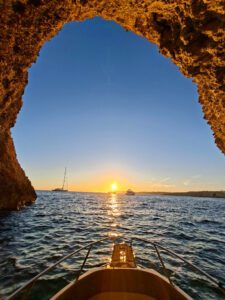
Short Answer:
Morning (9:00–11:00) and late afternoon (16:30 onward).
Expanded Answer:
During these hours, the sun angle enhances the lagoon’s white sand and bright turquoise colour. Morning offers the clearest water and fewer people. Late afternoon provides warm golden light and calmer conditions. Midday also gives strong colour, but photos often include large crowds in summer.
Is the Blue Lagoon good for families in 2026?
Short Answer:
Yes — especially with a private boat for comfort and safety.
Expanded Answer:
Families enjoy the shallow sandy sections and clear water, but the beach becomes extremely crowded between 11:00 and 16:00 in summer. Private boats offer shade, comfortable ladders, children’s life jackets, floats, and quiet swimming areas away from the crowds. Morning departures are ideal for families with smaller children.
Does the Blue Lagoon get overcrowded in summer?
Short Answer:
Yes — between 11:00 and 16:00 it becomes extremely busy.
Expanded Answer:
July and August attract thousands of visitors daily. Ferries and big boat tours arrive from late morning, filling the beach and jetty. Space becomes limited, queues grow, and the atmosphere becomes hectic.
Travelling by private boat is the only way to experience quiet turquoise water during peak season, as skippers anchor in less crowded areas on the south side of the lagoon.
Can I snorkel at the Blue Lagoon?
Short Answer:
Yes — but the best snorkelling is near Cominotto and Crystal Lagoon.
Expanded Answer:
The sandy centre is beautiful but has fewer fish. Better snorkelling spots include the Cominotto Reef, the swim-through cave on the west side, and the deeper walls of Crystal Lagoon. Conditions are safest in the morning with light north or northeast winds. Fins are recommended around Cominotto due to mild currents.
Is the Blue Lagoon safe for non-swimmers?
Short Answer:
Yes — in shallow areas or from a private boat with life jackets.
Expanded Answer:
The lagoon offers gentle entry points where non-swimmers can stand, but deeper areas and the central channel can have currents. Private boats provide the safest option with life jackets, floats, ladders, and calm selected swimming zones chosen by the skipper based on weather and comfort.
Are there sharks at the Blue Lagoon?
Short Answer:
Sharks exist in Maltese waters, but sightings around the Blue Lagoon and Comino are extremely rare.
Expanded Answer:
Malta has several shark species, including small reef sharks and occasional migrating species, but they strongly avoid shallow, busy areas such as the Blue Lagoon, Crystal Lagoon, and Comino’s swimming zones. These locations are very shallow, noisy, and heavily trafficked by boats, which naturally deters sharks.
Locals swim around Malta daily without concern, and there are no recorded incidents involving swimmers at the Blue Lagoon. There is a long-standing local belief that the best chance of spotting sharks in Malta is around the deep waters near Filfla island, far south of Comino, yet even there sightings are still extremely rare. Overall, shark encounters in Malta are considered virtually nonexistent.
What should I bring to the Blue Lagoon in 2026?
Short Answer:
Swimwear, towel, sunblock, hat, water, and snorkel gear.
Expanded Answer:
Essentials include sun protection, water, snacks, footwear for walking, and a waterproof bag. Visitors on private boats enjoy extras such as a shade canopy, ice box, snorkelling equipment, and an easy-access swim ladder, making the experience far more comfortable than staying on the crowded beach.
Can you drink alcohol at the Blue Lagoon?
Short Answer:
Yes — drinking alcohol is allowed, but responsibility is important due to deep areas and currents.
Expanded Answer:
There are no restrictions against bringing or consuming alcohol at the Blue Lagoon. However, visitors should be cautious, especially when swimming or cliff diving. The central channel reaches deeper water, and currents increase in the afternoon. Private boats provide a safer environment, with shade, stable anchoring, and skippers ensuring guests stay within safe swimming zones.
Are there any rules or restrictions at the Blue Lagoon in 2026?
 2026?
2026?Short Answer:
Yes — including the mandatory Blue Lagoon Pass for stepping on land.
Expanded Answer:
In 2026, key rules include:
- You must register for the Blue Lagoon Pass to go on land.
- No camping outside the designated campsite.
- No barbecues or open flames.
- No drone flying without special permission.
- Respect protected Natura 2000 areas.
Visitors arriving by private boat who do not go on land bypass the Blue Lagoon Pass requirement.
Can you bring a cooler to the Blue Lagoon?
Short Answer:
Yes — but carrying it on the ferry is inconvenient and there’s little space on land.
Expanded Answer:
Bringing a cooler is allowed, but the crowded beach, steep walkways, and limited shade make it difficult to manage. Private boats already include ice boxes, making it much easier to keep drinks and food cold without carrying heavy items across the island.
Is the Blue Lagoon good for young children or toddlers?
Short Answer:
Yes — but only during quieter hours, ideally before 11:00 or after 16:00.
Expanded Answer:
The shallow sandy entry makes the lagoon suitable for young children, but the beach gets extremely crowded from 11:00 to 16:00 in summer. Families usually prefer private boats because they offer safe ladders, children’s life jackets, shade, and quiet turquoise swimming areas far from the rush and noise.
Is Blue Lagoon water cold?
Short Answer:
Warm in summer, mild in shoulder seasons, and cool in winter.
Expanded Answer:
Water temperatures range from:
- June–September: 24–28°C (warm and ideal)
- April–May & October: 19–22°C
- November–March: 14–17°C
The white sandy bottom and sunny weather help warm the lagoon earlier than deeper bays.
Can you snorkel safely with kids at the Blue Lagoon?
Short Answer:
Yes — but choose calm areas away from the central channel.
Expanded Answer:
Shallow areas near Comino’s side are best for children. The centre of the lagoon and the Cominotto channel can have currents and boat traffic, especially after midday. Private boats allow skippers to choose safe, sheltered snorkelling spots such as Santa Marija Bay or the quiet south side of Blue Lagoon.
How clear is the water at the Blue Lagoon?
Short Answer:
Exceptionally clear — visibility often exceeds 20–30 metres.
Expanded Answer:
Thanks to constant circulation, lack of sediment, and a white sandy seafloor, the Blue Lagoon maintains some of the clearest water in the Mediterranean. On calm mornings with light north winds, visibility can reach 30 metres, making it ideal for snorkelling, underwater photography, and drone footage (where legal).
Does weather affect Blue Lagoon water colour?
Short Answer:
Yes — calm, sunny weather gives the brightest turquoise colour.
Expanded Answer:
The lagoon’s iconic colour depends on sunlight and wave conditions.
- Best: no wind or light north/northeast winds
- Good: east or southeast winds
- Worst: west, southwest, or south winds
Cloudy days make the water appear darker, and choppy seas reduce visibility. Calm mornings provide the clearest conditions.
Is Blue Lagoon safe during strong winds?
Short Answer:
It depends on wind direction — north winds keep it calm, west winds make it rough.
Expanded Answer:
The lagoon is sheltered from the north, northeast, and east. Strong west, southwest, or south winds bring waves and reduce clarity. Private boat skippers adjust routes based on wind, switching to sheltered bays like San Niklaw, Santa Marija, or the south side of Gozo when needed.
Are there any medical or first aid facilities at the Blue Lagoon?
Short Answer:
Basic first aid is available, with lifeguard presence expected year-round from 2026, though facilities remain limited.
Expanded Answer:
From 2026 onward, lifeguards are expected to operate at the Blue Lagoon throughout the year, not only during peak summer months. They are stationed near the main sandy beach and provide basic first aid, monitor swimming conditions, and display safety flags and jellyfish warnings.
Facilities remain limited, with no medical clinic on Comino, and coverage applies mainly to the main beach area. Travellers with medical conditions, mobility concerns, or families often prefer visiting by private boat, as skippers can quickly relocate to sheltered areas or return to Malta if conditions or comfort require it.
Can you kayak around the Blue Lagoon?
Short Answer:
Yes — kayaking is allowed and very popular in calm conditions.
Expanded Answer:
Kayaks can enter shallow areas, small caves, and quiet corners that big boats cannot reach. Conditions are safest in the morning with light winds. Visitors should avoid the Cominotto channel during busy hours because of boat traffic. Kayaks are usually available for rent in summer near the main beach.
Can you swim from Blue Lagoon to Crystal Lagoon?
Short Answer:
No — the cliffs between them make swimming unsafe and impossible.
Expanded Answer:
Although the lagoons are close, steep rock formations separate them. The only safe way to move between Blue Lagoon and Crystal Lagoon is by boat. This is one reason Crystal Lagoon remains quieter and more exclusive.
Are there showers at Blue Lagoon?
Short Answer:
Yes — basic freshwater showers are available near the main beach.
Expanded Answer:
Facilities are simple but functional. In peak season, queues form between 12:00 and 15:00. Private boats let you rinse off in the sea and avoid crowds, which many travellers find easier.
Does the Blue Lagoon have sand or rocks?
Short Answer:
Both — a small sandy beach and larger rocky areas.
Expanded Answer:
The main beach has fine white sand but is very small. Most people sit on flat rocks or rent deckchairs (€50+ per set). Private boat guests avoid land entirely and swim directly in the blue water, which is actually the best part of the lagoon.
Is the Blue Lagoon worth visiting in winter?
Short Answer:
Yes — for scenery and hiking, but swimming can be cold.
Expanded Answer:
From November to March, the area is quiet and beautiful, perfect for hiking and photography. Sea temperatures range between 14–17°C, so swimming is possible but chilly. The water remains clear, and there are almost no crowds. Private boats operate depending on weather.
Can you cliff jump at the Blue Lagoon?
Short Answer:
Yes — but the best cliff diving is at Crystal Lagoon, not the main lagoon.
Expanded Answer:
Crystal Lagoon offers safe jumping spots with deep, clear water. Blue Lagoon itself has limited cliff-jumping areas due to shallow zones and boat traffic. Anyone attempting cliff diving should check depth, avoid windy days, and always jump where skippers advise.
Are there fish at the Blue Lagoon?
Short Answer:
Yes — but more near Cominotto and Crystal Lagoon.
Expanded Answer:
The central sandy area has few fish, but snorkellers often see small reef fish, wrasse, and bream near the rocky edges. For richer snorkelling, Cominotto Reef, the swim-through cave, and Crystal Lagoon walls offer far better marine life.
Does the Blue Lagoon get windy?
Short Answer:
Yes — like everywhere else in Malta, it can get windy, and some wind directions are worse than others.
Expanded Answer:
The Blue Lagoon is exposed to wind just like the rest of Malta, but the effect on the water depends on wind direction and strength, not just the time of day. On some days it stays calm all afternoon, while on others it becomes choppy.
For Blue Lagoon, the worst winds are from the west and south-west, which push waves into the bay, reduce water clarity, and make swimming less comfortable. North, north-east, east, or south-east winds are usually much better, especially when they are light, and can still give calm, clear conditions.
Skippers choose where to anchor based on the wind, and on days with uncomfortable west or south-west winds they often prefer more sheltered bays such as San Niklaw, Santa Marija, or parts of Gozo’s south coast.
How busy is Blue Lagoon in 2026?
Short Answer:
Very busy in summer between 11:00 and 16:00.
Expanded Answer:
Visitor numbers continue to rise in 2026, especially with the new pass system attracting more organised tours. The key to avoiding crowds is:
- arrive before 11:00
- or visit after 16:00
- or visit with a private boat, which anchors away from the crowded beach and ferries
What is the best way to experience the Blue Lagoon in 2026?
Short Answer:
A private boat offers the best, most flexible, and least crowded experience.
Expanded Answer:
Private boats allow you to enjoy the bluest water away from crowds, visit Crystal Lagoon, explore Cominotto Reef, enter hidden caves, and swim safely from the boat with comfortable ladders and shade. Ferries are the cheapest, but they limit where you can go and when you can leave. Group tours are convenient but crowded.
Many travellers now prefer private boats for a calmer, custom route that includes all the highlights of Comino without the stress of the main beach.