



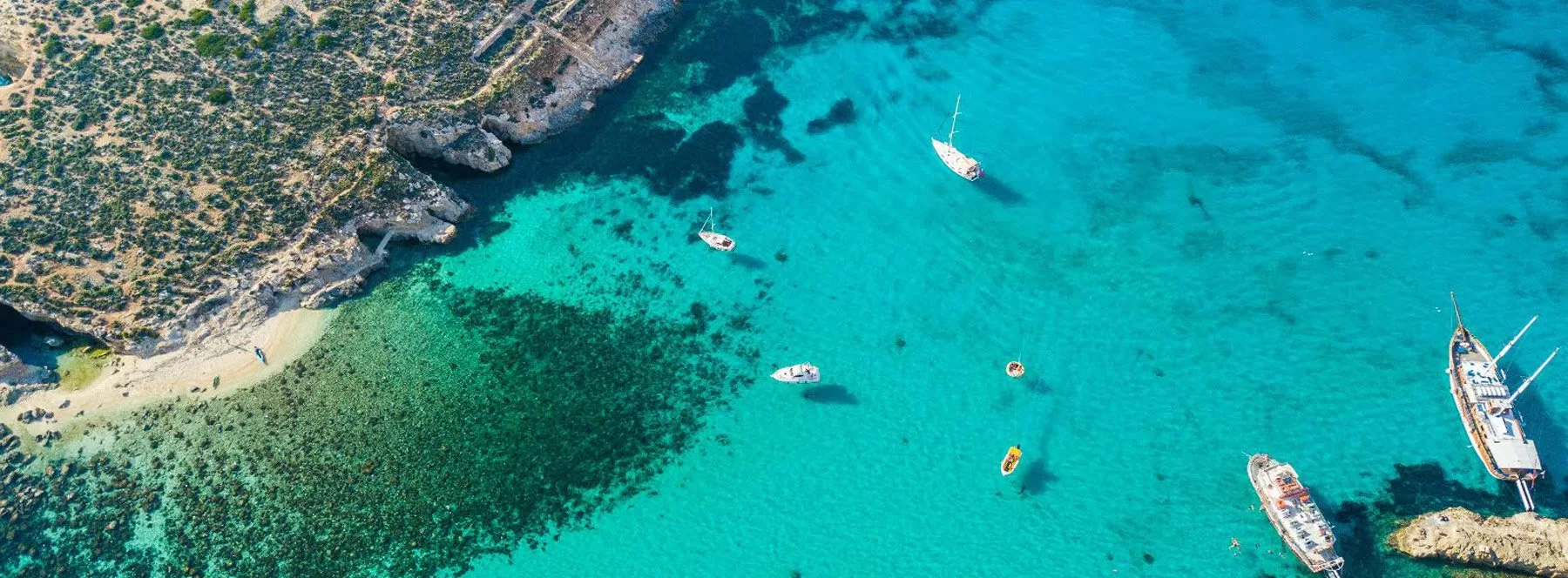
Visiting the Blue Lagoon in Malta: A Local’s Guide
Visiting the Blue Lagoon is at the top of almost every Malta itinerary—and for good reason. With its shallow, turquoise water and almost unreal colour, it’s one of the most beautiful swimming spots in the Mediterranean. But it’s also one of the most misunderstood.
As a local, the biggest mistake we see visitors make is assuming the Blue Lagoon is a simple “show up and swim” destination. In reality, planning matters, especially since new access rules were introduced to protect the area. Crowds, transport timing, access slots, and how you choose to visit can completely change your experience—for better or worse.
This guide is designed to give you clear, honest, local insight. Not hype. Not shortcuts. Just practical information so you know exactly what to expect before you arrive.
You’ll learn:
-
Where the Blue Lagoon actually is (and why that matters)
-
Why it’s now protected and regulated
-
How the new booking system works, step by step
-
Who needs a QR code—and who doesn’t
-
How to avoid the most common mistakes first-time visitors make
If you’re visiting Malta for the first time, this guide will help you experience the Blue Lagoon at its best, not at its most crowded or confusing.
Quick Navigation
-
Where Is the Blue Lagoon?
-
Why the Blue Lagoon Is Protected
-
Blue Lagoon Access Management System (AMS)
-
Getting There & Planning
Where Is the Blue Lagoon?
The Blue Lagoon is located on Comino, a tiny island that sits between Malta and Gozo. Comino is the smallest inhabited island of the Maltese archipelago and is known almost entirely for its natural coastline rather than towns or development.
There are no villages on Comino, very few roads, and minimal infrastructure beyond basic facilities near the Lagoon. This isolation is exactly what makes the Blue Lagoon so special—but it’s also why logistics like transport and access need careful management.
Why the Blue Lagoon Looks So Blue
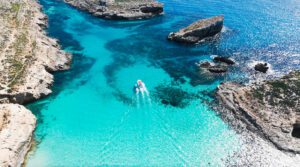
The Blue Lagoon’s famous colour isn’t a filter or a trick of the light. What you see on sunny days is the result of a perfect combination of natural factors working together.
The main reasons the water looks so intensely blue are:
-
A white sandy seabed, which reflects light upward
-
Shallow, crystal-clear water, allowing light to penetrate easily
-
Natural shelter created by Cominotto, which keeps the water calm and undisturbed
Just as important, however, is sunlight.
On bright, sunny days, the sun hits the pale seabed and limestone surroundings, reflecting light back through the water and creating the Lagoon’s signature turquoise and milky-blue tones. When the sun is high and skies are clear, the colour is at its most vivid.
Sunlight reflects off the pale seabed and surrounding limestone, creating that bright turquoise colour the Blue Lagoon is famous for.
Why It’s Malta’s Most Visited Natural Spot
Easy access by boat, calm swimming conditions, and stunning scenery have made the Blue Lagoon Malta’s most visited natural attraction, particularly from June to September.
However, this popularity also led to severe overcrowding in the past—one of the key reasons new protection measures were introduced.
Why the Blue Lagoon Is Protected (Natura 2000)
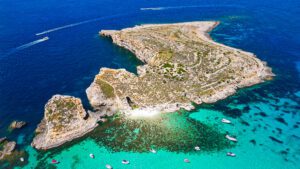
The Blue Lagoon forms part of a Natura 2000 protected site, a Europe-wide network created to safeguard important habitats and ecosystems.
What Natura 2000 Means in Simple Terms
Being part of Natura 2000 means the Blue Lagoon isn’t just a beautiful tourist destination — it’s a protected natural reserve that needs long-term care.
Comino, including the Blue Lagoon and much of the surrounding coastline, is officially designated as:
-
A nature reserve
-
A bird sanctuary
-
A marine and coastal protected area
This protection exists because the island is home to important bird species, fragile habitats, and sensitive marine life. Many birds use Comino as a nesting and resting area, especially during migration seasons, which is why certain activities are restricted.
Because of this status:
-
Fishing is not allowed around Comino
-
Marine life and seabeds are protected from damage
-
Visitor numbers on land are controlled to prevent erosion and overcrowding
-
Development on the island is extremely limited
In simple terms, Natura 2000 protection means that nature comes first. Tourism is still allowed, but only in a way that doesn’t harm the island, the sea, or the wildlife that depends on it.
These protections are exactly why Comino has remained largely untouched — and why the Blue Lagoon still looks as clear and natural as it does today.
What Happened Before the Rules
Before regulation, peak summer days at the Blue Lagoon often meant thousands of visitors arriving at the same time to a very small and fragile area.
This led to:
-
Extreme congestion on a limited shoreline
-
Unsafe conditions for swimmers and boats operating in close proximity
-
Damage to marine life and the seabed
-
Increased pressure on Comino’s natural environment
For visitors, the experience could quickly become stressful rather than enjoyable. For the island itself, the long-term environmental impact became impossible to ignore.
Why Regulation Became Necessary
To address these issues, the Maltese government introduced new measures aimed at protecting Comino and improving visitor safety.
Since 1st May 2025, a new rule has been in place:
👉 Anyone who wants to step on land within the Blue Lagoon area must first obtain an official access ticket (QR code) via the Access Management System (AMS).
The goals of this regulation are to:
-
Limit how many people are on land at any one time
-
Improve safety and crowd control
-
Protect the Lagoon and surrounding habitats for future generations
This change marked the introduction of the Blue Lagoon Access Management System (AMS).
Important Clarifications Visitors Should Know
These rules apply only to the Blue Lagoon shoreline area.
Visiting by Private Boat
If you arrive on a private boat and do not go on land, you do not need an access ticket.
You can:
-
Stay on board
-
Swim directly from the boat
-
Enjoy the Lagoon from the water
This is one of the reasons many visitors now choose to experience the Blue Lagoon from the sea.
Beaches on Comino Where the AMS Does Not Apply
The AMS does not apply to other beaches and bays around Comino, including:
-
Santa Marija Bay
-
Wied Ernu
-
Tal-Ħmara Bay
-
Other non–Blue Lagoon coastal areas on Comino
These locations remain accessible without a Blue Lagoon access ticket.
Special Note About San Niklaw Bay (Comino Hotel Area)
Access to San Niklaw Bay, located next to the former Comino Hotel, is currently restricted.
At present:
-
Land access from inland routes is closed
-
Visitors may only reach the beach by swimming from a boat
-
Access on land is limited to approximately the first 5 metres of the beach
-
Further exploration beyond this point is not permitted
This situation is the subject of an ongoing dispute, and rules may change in the future. Visitors should respect on-site restrictions and follow guidance from local authorities.
In Simple Terms
-
Blue Lagoon shoreline: Ticket required since 1 May 2025
-
Private boats (staying on water): No ticket needed
-
Other Comino beaches: No Blue Lagoon ticket required
-
San Niklaw Bay: Boat access only, very limited land access
Understanding these distinctions makes planning much easier and helps avoid confusion or disappointment on the day.
Blue Lagoon Access Management System (AMS) – Full Guide

This is the most important section for first-time visitors.
What Is the AMS?
The Blue Lagoon Access Management System (AMS) is an official, web-based platform that controls timed access to the shoreline.
Anyone who wants to step on land within the Blue Lagoon area must first reserve a free QR code.
👉 No QR code means no access to the shore.
Who Needs a QR Code?
You need a QR code if:
-
You want to sunbathe or stay on the beach
-
You plan to remain within the Lagoon land boundary
-
You intend to disembark from a boat and stay on shore
This applies to everyone, including locals.
Who Does NOT Need a QR Code?
You do not need a QR code if:
-
You arrive by boat and stay onboard
-
You swim directly from the boat without going ashore
-
You only pass through designated hardstanding paths to reach other parts of Comino
This is why many visitors choose to enjoy the Blue Lagoon from the water, especially in peak season.
Time Slots Explained
When booking, you must choose one of three time slots:
Morning (08:00–13:00)
Calmer conditions and popular with early visitors.
Afternoon (13:30–17:30)
Warmest water, but also the busiest period.
Sunset (18:00–22:00)
Quieter atmosphere with softer light, though fewer services operate on shore.
Why the 30-minute buffer exists
The gap between slots allows for safe boat manoeuvring and controlled arrivals and departures.
Step-by-Step Booking Walkthrough
All bookings are made through the official AMS website:
👉 https://blcomino.com/product/blue-lagoon/
You’ll need to:
-
Select your preferred time slot
-
Enter your email address
-
Choose the number of people (up to four per booking)
Your QR code is sent by email once confirmed.
QR Codes, Wristbands & Entry Rules
-
QR codes can be shown on your phone or printed
-
On arrival, your code is scanned and exchanged for a wristband
-
Wristbands must be worn during your visit
-
They must be returned before departure to reduce pollution
Re-entry, Leaving Early & Late Arrival
-
You may leave and re-enter during your time slot
-
Late arrivals are allowed access only for the remaining time
-
If you leave early, inform staff and return your wristband
Children, Short Stops & Special Cases

-
Children under 5 do not require a landing pass
-
Very short stops (such as buying a drink and returning immediately to the boat) usually don’t require a pass
-
Frequent visitors such as comino workers or volunteers must request special permission through the AMS
Common AMS Mistakes to Avoid
-
Assuming the QR code includes ferry transport
-
Forgetting to book during peak season
-
Losing the QR code email
-
Arriving outside your allocated time slot
Important to know
Understanding how the AMS works removes most of the stress associated with visiting the Blue Lagoon. Once you know when you need a QR code and when you don’t, planning becomes much simpler.
Getting to the Blue Lagoon (All Options)
Reaching the Blue Lagoon is straightforward, but how you choose to get there has a big impact on your overall experience. Below are the main options, explained clearly so you can decide what suits your travel style, budget, and expectations.
By Private or Tour Boat
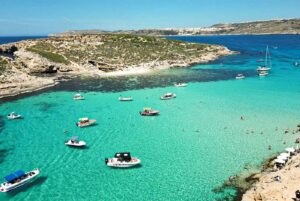
For most visitors, arriving by boat is the most convenient and comfortable way to reach the Blue Lagoon. Boats approach the lagoon directly from the sea, avoiding long land journeys and giving immediate access to swimming areas.
Boat trips typically depart from various coastal points around Malta and Gozo. In northern Malta, the most common departure point is Ċirkewwa, one of the closest locations to Comino. Many private boat trips to Comino and the Blue Lagoon depart from this area, including operators such as iMalta Boat Trips.
From Gozo, boats usually depart from Mġarr Harbour, making it a convenient option for visitors staying on the island. Private and small-group trips operating from Gozo include companies such as Outdoor Explorers Malta.
Departing from Ċirkewwa or Mġarr Harbour significantly reduces travel time at sea, allowing more time to enjoy swimming, relaxing, and exploring the Blue Lagoon and surrounding bays.
Why people choose boats:
-
Direct access to the lagoon’s clearest water
-
No need to search for limited space on the shoreline
-
Shade, ladders, and onboard facilities
-
Easier timing compared to public transport
-
Option to stay on the boat and avoid access tickets
Many visitors enjoy experiencing the Blue Lagoon from the water, which is often calmer and less crowded than the beach itself. Private boats add another layer of flexibility, as the day can be adjusted around sea conditions, crowd levels, and personal preferences.
By Shared Boat Trip
Shared boat trips are a popular middle-ground option for visitors who want a boat experience without booking a private charter.
These trips usually follow a fixed itinerary and operate on a schedule, often including:
-
A stop at the Blue Lagoon
-
Time for swimming from the boat
-
Occasionally other bays or caves around Comino
Good to know:
-
Less flexible than private boats
-
Departure and return times are fixed
-
Group sizes can be large in summer
Shared trips work well for travellers on a tighter budget, but they don’t offer the same freedom or calm experience as a private boat, especially during peak season.
By Jet Ski Safari or Watersports Tours
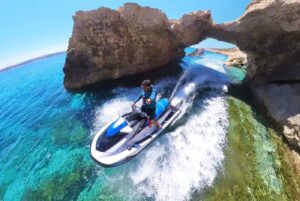
For visitors looking for something more adventurous, jet ski safari tours and guided watersports experiences are another way to reach or pass by the Blue Lagoon area.
These experiences usually involve:
-
Guided routes around Comino
-
Short swimming stops
-
A faster, more energetic experience
They’re weather-dependent and typically operate only in calm sea conditions, most commonly in summer.
Jet ski safaris are best suited for:
-
Confident riders
-
Short, high-energy experiences
-
Visitors looking for adventure rather than relaxation
They’re exciting, but not designed for long swimming or relaxing time at the Lagoon.
By Self-Drive Boat Rental (No Skipper)
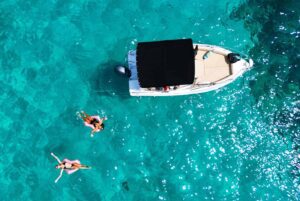
Self-drive boat rentals are another option for experienced visitors who want independence on the water.
Important requirements:
-
Minimum age: 21 years old
-
No boating licence required
-
Previous boating experience is essential
While these boats are straightforward to operate, renters are fully responsible for:
-
Navigation
-
Anchoring
-
Weather awareness
-
Safety of everyone onboard
Self-drive boats can be a great option for confident, experienced individuals, but they don’t offer the guidance, comfort, or local knowledge that comes with a skippered private boat.
By Ferry
Ferries are the most budget-friendly way to get to the Blue Lagoon and operate from northern Malta and Gozo.
Common departure points:
-
Ċirkewwa
-
Marfa
-
Mġarr Harbour
Pros of the ferry:
-
Cheapest option for most travellers
-
Frequent crossings in summer
-
Simple point-to-point transport
Cons to consider:
-
Ferries can get very crowded in peak season
-
Fixed return times reduce flexibility
-
Space on the Blue Lagoon shoreline is extremely limited
-
Ferry timing must match your AMS access slot
For first-time visitors, ferries work best early in the morning, outside peak summer, or during quieter months.
matches your expectations.
Boat vs Ferry vs Other Options: A Realistic Comparison
| Option | Comfort | Flexibility | Crowds | Time in Water | Access Ticket Needed* | Best For |
|---|---|---|---|---|---|---|
| Private Boat (Skippered) | ⭐⭐⭐⭐⭐ | ⭐⭐⭐⭐⭐ | Very low | Long & relaxed | ❌ No (if staying onboard) | Couples, families, first-timers, relaxed experience |
| Shared Boat Trip | ⭐⭐⭐ | ⭐⭐ | Medium–High | Moderate | ❌ No (if staying onboard) | Budget-conscious travellers |
| Ferry | ⭐⭐ | ⭐ | Very high | Limited | ✅ Yes (to go on land) | Short visits, early morning trips |
| Jet Ski Safari / Watersports | ⭐⭐⭐⭐ | ⭐⭐ | Low | Very short stops | ❌ No (water-based) | Adventure seekers |
| Self-Drive Boat (No Skipper) | ⭐⭐⭐⭐ | ⭐⭐⭐ | Low | Moderate–Long | ❌ No (if staying onboard) | Confident, experienced boaters |
*Access ticket (AMS QR code) is only required if stepping on land at the Blue Lagoon.
How to Read This Table (Simple Explanation)
-
Comfort = shade, space, ability to relax
-
Flexibility = control over timing, stops, and pace
-
Crowds = how busy the experience feels
-
Time in Water = how much actual swimming time you get
Quick Takeaways for First-Time Visitors

-
Private boats offer the most relaxed, flexible, and crowd-free experience
-
Shared boats are cheaper but less flexible, especially in summer
-
Ferries are budget-friendly but depend heavily on shore access and timing
-
Jet ski safaris are exciting but not designed for long swims or relaxation
-
Self-drive boats work well only if you already have boating experience
There’s no right or wrong option — just different experiences. The key is choosing the one that matches how relaxed, flexible, and comfortable you want your visit to the Blue Lagoon to be.
What’s the Best Way to Visit the Blue Lagoon?
This is one of the most common questions visitors ask, and the honest answer depends on how you want to experience the Lagoon.
Visiting from the Shore
Standing on the small sandy beach, wading into shallow water, and sunbathing on land is what many first-time visitors imagine when they think of the Blue Lagoon.
This option works best if you arrive early, plan ahead, and are comfortable sharing a limited space with many other visitors.
Pros:
-
Easy access to shallow water
-
Good for children and non-swimmers
-
Classic “beach day” feeling
Limitations:
-
Very limited space, especially in summer
-
Requires advance booking through the AMS
-
Very crowded during summer months
-
Fixed umbrellas are available, but very limited (around 100 for the entire lagoon)
Shore visits can be enjoyable, but they rely heavily on timing, availability, and realistic expectations, particularly during peak season.
Visiting from the Water

Many visitors discover that the Blue Lagoon is just as enjoyable — and often more so — when experienced from the sea.
Why visiting from the water works well:
-
Access to deeper, clearer water
-
No need to compete for beach space
-
Ability to move if an area feels crowded
-
Natural shade and rest areas onboard
Swimming directly from a boat lets you enjoy the same iconic turquoise colours, often with more space, less noise, and far greater flexibility.
Why Locals Prefer the Water
Locals tend to avoid the busiest parts of the shoreline and instead enjoy the Lagoon from the water or nearby bays. The reason is simple: it’s calmer, more flexible, and far less stressful, especially in summer.
This local approach focuses on enjoying the environment itself — swimming, floating, and moving with the day — rather than rushing to secure a spot on the beach or worrying about access times.
Best Time to Visit the Blue Lagoon
Timing plays a huge role in how much you’ll enjoy the Blue Lagoon. Each season offers a slightly different experience.
Spring (March–May)
Spring is often overlooked, but it’s one of the most pleasant times to visit.
What to expect:
-
Fewer crowds
-
Mild temperatures
-
Excellent light for photography
-
Sea becomes swimmable by late May
Best for: Active travellers, couples, hikers, and photographers.
Summer (June–September)
Summer is peak season and when the Lagoon is at its liveliest.
What to expect:
-
Warm sea temperatures
-
Long sunny days
-
Peak crowds from late July to August
-
AMS access required for shore visits
Local tip: Early mornings, late afternoons, or boat-based visits are the most comfortable options.
Autumn & Winter (October–February)
Swimming becomes less common in winter, but Comino remains beautiful.
What to expect:
-
Very quiet atmosphere
-
Cooler temperatures
-
Ideal hiking conditions
-
Dramatic coastal views
Best for: Nature lovers and visitors who prefer solitude over swimming.
Common Blue Lagoon Mistakes to Avoid
Even well-prepared travellers can run into issues without the right information.
Arriving at peak midday hours
Late morning to mid-afternoon is the busiest time, particularly in August.
Misunderstanding access rules
Not everyone needs a QR code. Knowing whether you’ll be on land or on a boat simplifies planning.
Underestimating the sun
There’s little natural shade. Sunscreen, hats, and water are essential.
Not planning food and water
Food kiosks are available, but queues can form during busy periods.
Not booking boats in advance
During the summer months, many boat trips — especially good private boats and reputable operators — are fully booked weeks or even months in advance. Booking early gives you better choice, better boats, and far less stress.
Avoiding these common mistakes can make the difference between a stressful visit and a relaxed one.
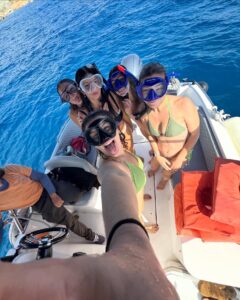
 If you prefer peaceful swimming away from the main crowds, Comino has several quieter bays worth knowing about. These spots offer the same clear water as the Blue Lagoon, but with far fewer people.
Crystal Lagoon (Il-Bejta tal-Fenek / L-Għar ta’ Bla Saqaf)
While not technically a bay, Crystal Lagoon is one of the most spectacular swimming spots around Comino and is absolutely worth mentioning. Known locally as Il-Bejta tal-Fenek and L-Għar ta’ Bla Saqaf, this deep natural lagoon sits just around the corner from the Blue Lagoon and offers a completely different experience.
Crystal Lagoon is characterised by deep, intensely blue water, dramatic limestone cliffs, and excellent visibility, making it a favourite for confident swimmers, snorkellers, and free divers. Unlike the Blue Lagoon, there is no sandy beach and no shore access, which naturally keeps visitor numbers lower and the atmosphere calmer.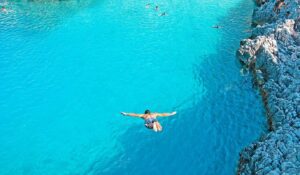
It is also widely considered one of the best cliff-diving locations in Malta, often rated by locals as even better than St Peter’s Pool due to its depth, clear visibility, and sheer rock faces. The water here is significantly deeper than most coastal swimming spots, which is why experienced cliff divers prefer it.
That said, cliff diving should only be attempted by confident swimmers, and conditions must always be checked carefully. Jumps should be made only after verifying depth, sea conditions, and boat traffic, and are never recommended in rough seas or poor visibility.
Access to Crystal Lagoon is typically by boat only, and private boats often anchor nearby to allow swimming directly from the water. Because of its depth and open layout, the water here often appears even darker and clearer than at the Blue Lagoon, especially on sunny days.
This area is ideal if you:
-
Prefer swimming away from crowds
-
Enjoy snorkelling or free diving
-
Are looking for dramatic scenery and deeper water
-
Want a more natural, untouched setting
For many locals and experienced visitors, Crystal Lagoon is considered one of the top swimming and cliff-diving spots around Comino, especially when the main Blue Lagoon feels too busy.