



Blue Lagoon Malta – Complete Visitor Guide 2026
(What to Expect, Rules, Best Time & How to Visit Without the Crowds)
Short Answer
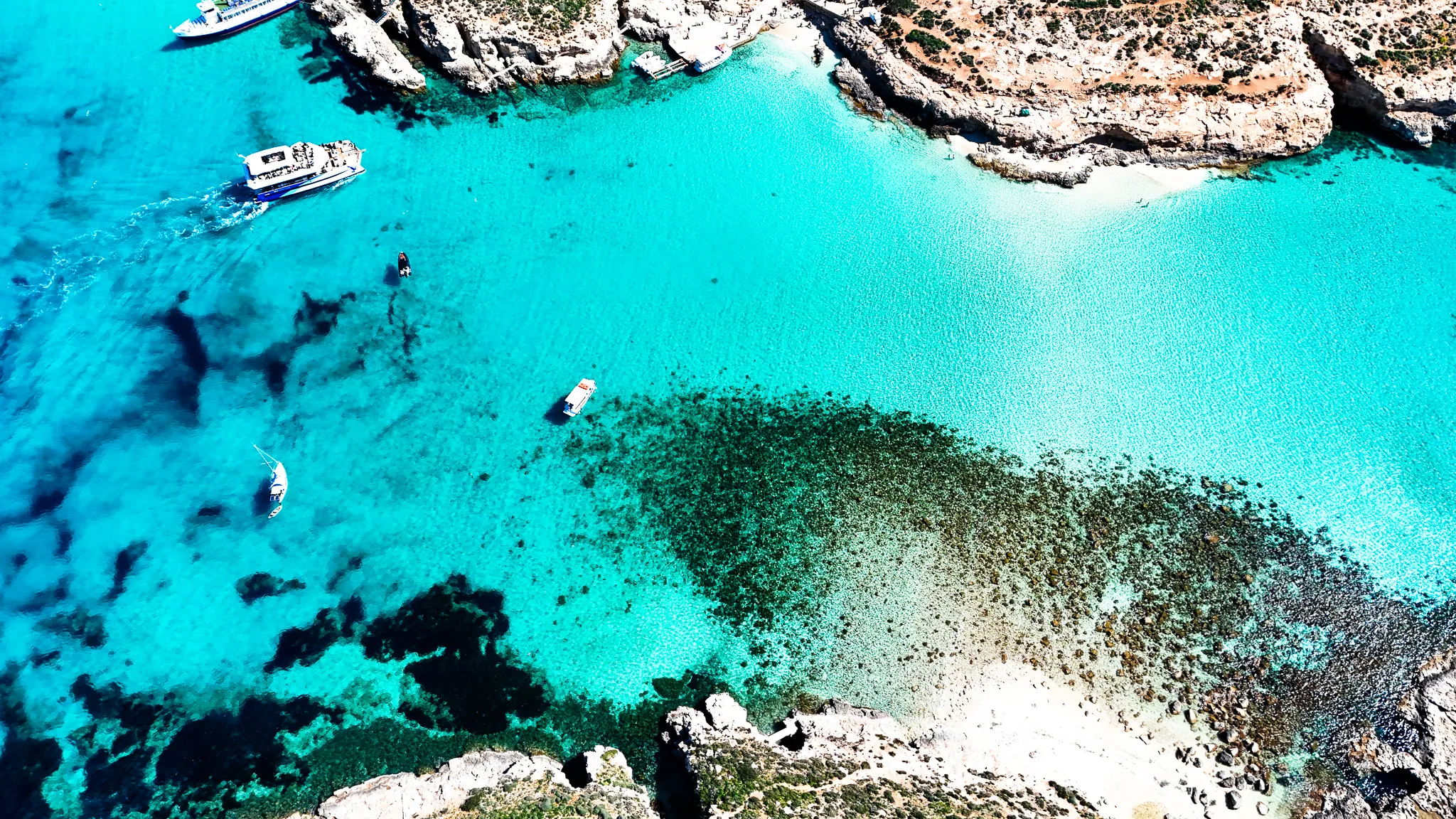
The Blue Lagoon is a shallow turquoise lagoon between Comino and Cominotto, famous for its white seabed and crystal-clear water. In 2026, the best way to enjoy it is early morning or late afternoon, ideally by private boat, to avoid crowds, swim in quieter areas, and explore nearby caves and beaches.
What Is the Blue Lagoon and Why Is It So Famous?
The Blue Lagoon is a natural sea pool located between Comino Island and Cominotto, formed by a white sandy seabed, limestone rock, and constant water circulation. These elements reflect sunlight intensely, creating the unreal turquoise colour seen in photos.
What makes it special:
• very shallow, calm water
• bright white sand underfoot
• excellent visibility
• sheltered swimming conditions
• suitable for families and children
• dramatic cliffs and caves nearby
It is one of the most photographed swimming spots in the Mediterranean.
Where Is the Blue Lagoon Located?
The Blue Lagoon sits:
• between Comino and Cominotto
• north of Malta
• south of Gozo
There are:
• no roads
• no cars
• no public transport
• no permanent residents
Access is only by sea.
Blue Lagoon Access Management System (2026 Update)
Do You Need to Register to Visit?
Yes — only if you plan to step onto land.
From May 2025 onward, Malta introduced a free registration system to control overcrowding.
Key points:
• registration is free
• QR code issued digitally
• time-slot based
• up to 4 people per booking
• wristband issued on arrival
Official registration website:
https://blcomino.com/product/blue-lagoon/
Important

Visitors arriving by private boat and staying on the water do not need to register, as they do not disembark onto land.
Best Time to Visit the Blue Lagoon

Spring (March–May)
• quietest season
• fresh green landscape
• excellent water clarity
• cooler but swimmable days
Ideal for photographers and relaxed visitors.
Summer (June–September)
• warmest water
• strongest turquoise colour
• extremely crowded between 11:00–16:00
• ferries arrive constantly
Best strategy: early morning or late afternoon.
Autumn (October–November)
• warm sea temperatures
• fewer visitors
• calm conditions
• excellent snorkelling
Winter (December–February)
• cold water (14–17°C)
• no swimming zones
• no lifeguards
• excellent for sightseeing and photography
Swimming Safety & Lifeguards
Swimming Zones
Active from May to October.
 • depth inside zone: up to ~2 metres
• outside zone: 4–7 metres
• central channel becomes much deeper
Meaning of Safety Flags
• Green – safe
• Yellow – mild currents
• Purple – jellyfish or sea pests
• Red – dangerous conditions
• Double Red – swimming prohibited
Boat Traffic Awareness
• highest risk area is the central channel
• always stay inside buoys when swimming
• when snorkelling, look around frequently
• never enter water before skipper approval
How to Get to the Blue Lagoon
Ferry from Cirkewwa, Marfa or Mgarr
• cheapest option
• drops passengers directly on land
• crowded at peak times
• limited flexibility
Day Cruises from Sliema or Valletta
• long travel time
• sightseeing focused
• short swimming windows
• crowded decks
Private Boat (Most Flexible Option)
• avoid land crowds
• anchor in quieter turquoise areas
• access caves and hidden bays
• flexible timing
• shorter travel time from the north
Nature & Marine Life Around the Blue Lagoon
The lagoon and surrounding reefs host:
• bream, wrasse, mullet
• octopus near Cominotto and san niklaw bay
• barracuda and amberjack further out
• rich snorkelling along rocky edges and crystal lagoon
Best snorkelling areas are away from the sandy centre, especially near Cominotto and nearby caves.
Food, Shade & Facilities
• food trucks available
• cash recommended
• no ATMs
• limited natural shade
• deckchairs and umbrellas are limited
The Comino Hotel complex is spread across the Santa Marija and San Niklaw areas. Its restaurant is located at San Niklaw Bay, around a 7-minute walk from the Blue Lagoon, but it remains closed for refurbishment in 2026.
Accommodation & Camping
• Comino Hotel currently closed for refurbishment
• only legal camping area is Ramlija, near San Niklaw Bay
• camping is not allowed at the Blue Lagoon
Is the Blue Lagoon Safe for Families?

Yes — with proper timing and conditions.
Families benefit from:
• shallow sandy entry
• calm morning water
• lifeguard presence in season
Midday crowds reduce comfort, which is why many families prefer visiting earlier or staying offshore.
Final Tips for Visiting the Blue Lagoon in 2026
• avoid 11:00–16:00 in summer
• visit early morning or late afternoon
• check wind forecast
• respect swimming zones
• bring sun protection
• consider staying on the water instead of land
Best Way to Experience the Blue Lagoon
The most complete experience combines:
• quiet swimming
• flexibility
• access to caves
• nearby beaches like Santa Marija
• Crystal Lagoon
• Cominotto Reef
This is easiest to achieve with a small boat that can adapt to conditions and crowds.
Blue Lagoon FAQs (2026)
Is the Blue Lagoon worth visiting in 2026?
Yes. The Blue Lagoon remains one of Malta’s most beautiful natural sites in 2026, especially when visited early morning, late afternoon, or by private boat to avoid crowds.
Do you need a ticket to visit the Blue Lagoon?
There is no entrance fee, but visitors stepping onto land must register for a free Blue Lagoon Access Pass via the official government system.
Do private boat visitors need the Blue Lagoon Pass?
No. If you stay on the boat and do not go on land, the pass is not required.
What is the best time of day to visit the Blue Lagoon?
Early morning (before 11:00) and late afternoon (after 16:00) are best. These times offer calmer water, fewer people, and better swimming conditions.
Is the Blue Lagoon safe for swimming?
Yes, in normal weather conditions. The lagoon is shallow and sheltered, with lifeguards present during the main season. Always follow flag warnings and stay inside swimming zones.
Are there strong currents at the Blue Lagoon?
Currents are usually mild near the shore but can be stronger in the central channel between Comino and Cominotto, especially in the afternoon or windy conditions.
Can children swim safely at the Blue Lagoon?
Yes. The shallow sandy areas are suitable for children when supervised. Families should visit early in the day to avoid crowds and heat.
Are there sharks at the Blue Lagoon?
No. There have been no recorded shark incidents at the Blue Lagoon. Shark sightings in Malta are extremely rare, and locals swim here daily without concern.
Can you visit the Blue Lagoon without swimming?
Yes. Many visitors explore Comino by boat, visit caves, cruise the coastline, hike to viewpoints, or enjoy sightseeing without entering the water.
Is the Blue Lagoon crowded in summer?
Yes. Between 11:00 and 16:00 it becomes extremely busy in July and August. Visiting outside these hours or staying offshore makes a big difference.
How do you get to the Blue Lagoon?
You can reach it by ferry, group tour, private boat, self-drive boat, or jet ski. The fastest routes depart from northern Malta.
Is there shade at the Blue Lagoon?
Natural shade is very limited. Umbrellas and sunbeds are available for hire but limited. Boats with canopies provide the most reliable shade.
Can you snorkel at the Blue Lagoon?
Yes, but the best snorkelling is near the rocky edges, Cominotto Reef, and nearby caves rather than the sandy centre.
Is the Blue Lagoon open in winter?
Yes. You can visit year-round, though swimming is less common in winter due to cooler water and the absence of lifeguards.
Explore the Blue Lagoon the Right Way
For a calm, crowd-free experience with access to the clearest water, hidden caves, and flexible timing, many travellers choose to explore the Blue Lagoon by private boat from northern Malta.
Book Here

https://www.imaltaboattrips.com/