



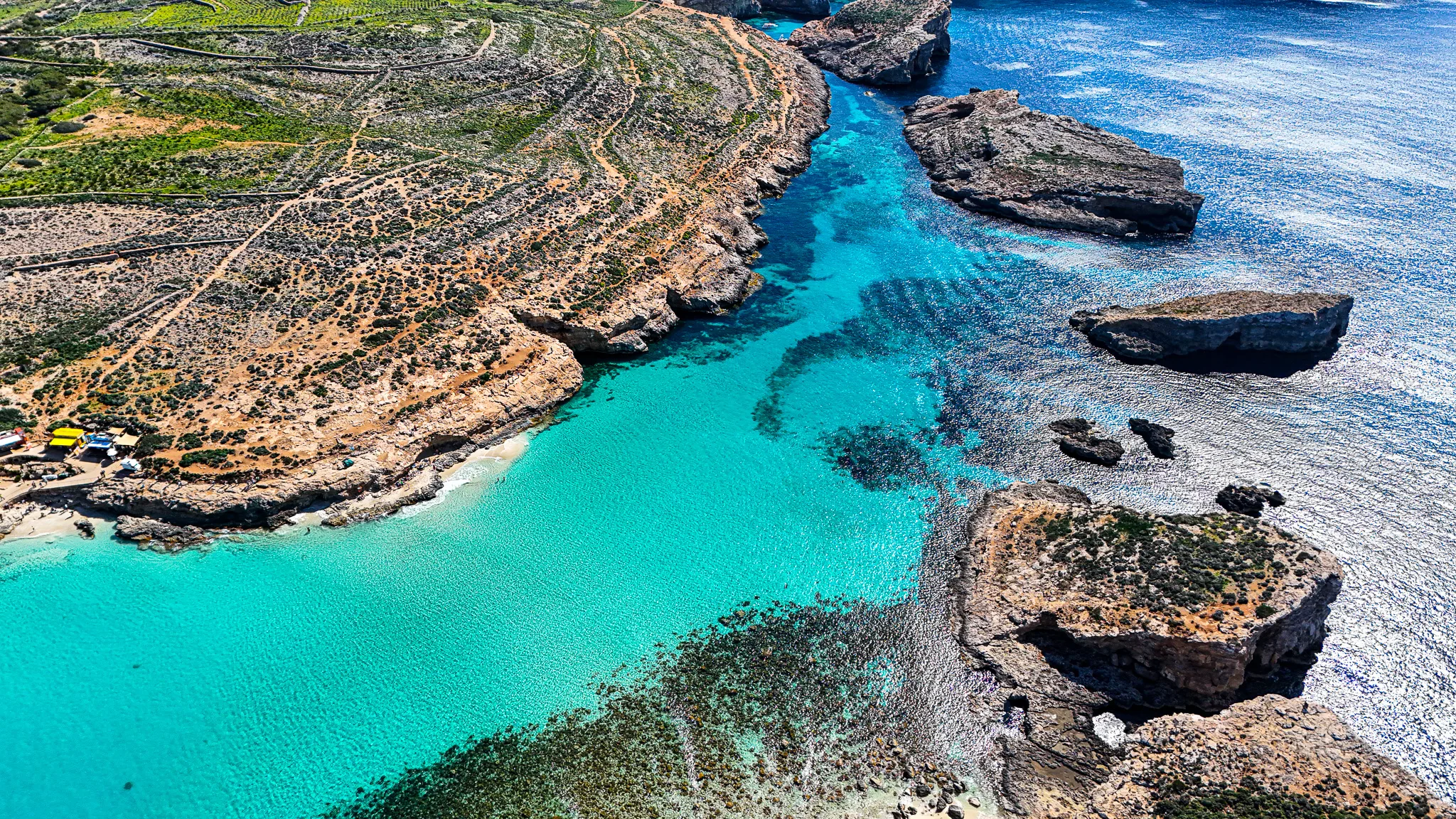
Where to Swim in the Blue Lagoon Malta: Best Spots & Safety Guide
The best Blue Lagoon swim depends on whether you arrive by ferry or boat, how confidently you swim and the conditions that day. This guide ranks the useful swimming areas, explains the Cominotto crossing risk and shows families, snorkellers and budget visitors where to start.
Written from daily local experience around Comino and fact-checked on by the family team behind iMalta Boat Trips and Outdoor Explorers Malta.
Blue Lagoon Swimming: Quick Facts for 2026
Best Places to Swim in the Blue Lagoon Malta, Ranked
These rankings are based on the quality of the swimming experience, not simply the most photographed beach. Your safest suitable area may change on the day.
Cominotto Blue Lagoon Beach — Best Reached by Private Boat
The Cominotto side gives you the Blue Lagoon’s famous turquoise colour with more breathing room than the main arrival beach. The pale seabed creates exceptionally bright water, while the rocky habitat can make snorkelling more interesting than the central sandy bottom. With a private skipper, you can enjoy a carefully chosen swim stop and then see more of Comino’s secluded coastline instead of spending the whole visit beside the shore crowd.
From our local trips, we also point out two small cave openings around this side of Cominotto; one leads to a tiny sheltered sandy patch within the rock. This is a first-hand local observation, not a guaranteed cave stop. Only an experienced skipper should decide whether a close approach is safe. Self-drive boats must not enter caves or the marked swimming zone.
A responsible skipper chooses a lawful position outside marked swimming areas and explains exactly where guests may enter. The boat provides shade, a ladder, flotation equipment and somewhere secure for belongings, while the route can change with wind, swell, traffic and the ability of the group.
The Small Sandy Blue Lagoon Beach on Comino
The small sandy patch beside the main arrival area offers the simplest gradual shore entry. It can suit children and less confident swimmers when conditions are suitable, lifeguards are operating and an adult remains within immediate reach.
Its weakness is space: it fills quickly and is much smaller than many photographs suggest. For families with children, our preferred experience is the Blue Lagoon by private skippered boat, with shade, life jackets, a ladder and the option to move if the shore becomes uncomfortable. If the children later want to enter from a proper beach, ask whether conditions suit a stop at Santa Marija Bay, which has a longer, wider stretch of pale sand and is often less crowded than the main Blue Lagoon beach.
The Shallow Rocky Edge Beyond the Main Sand
Moving away from the centre of the small beach can give you a little more room while keeping shore access. Water shoes help on sharp or slippery limestone.
Stay within the designated swimming area, enter only where you can exit comfortably and avoid climbing across unstable or crowded ledges.
Self-Drive Boat Outside the Swimming Zone
A self-drive boat can give boating-confident adults more independence than a ferry and lets the group enjoy Blue Lagoon water away from the main shore. It is a good alternative for customers aged 21+ who complete the briefing, understand anchoring and follow the permitted operating area.
It is not the same experience as having a local skipper. Self-drive customers must stay outside the marked swimming zone, must not take the boat into caves and should never force a route when wind, swell or traffic makes it uncomfortable. If you want the caves, hidden corners and the widest safe choice of swim stops, choose a private skippered tour.
The Central Blue Lagoon Channel
This is the recognisable strip between Comino and Cominotto. The white sandy seabed creates the bright colour, but the area can be busy with swimmers and affected by water movement through the channel.
It is beautiful for a supervised dip in suitable conditions, but it is not automatically the best place for a long, relaxed swim.
Crystal Lagoon by Boat
Crystal Lagoon is deeper, surrounded by cliffs and normally less shore-focused. Many iMalta guests prefer it for snorkelling and dramatic scenery.
It is not a shallow beach substitute: entry, caves and swim areas depend on wind, swell, traffic and skipper approval.
Which Blue Lagoon Swimming Area Is Best for You?
| Visitor | Best starting point | Main advantage | Important limitation |
|---|---|---|---|
| Family with young children | Private skippered boat; sandy entry if ashore | Shade, equipment and flexible swim stops | Constant adult supervision is still required |
| Less confident swimmer | Shallow shore edge or stay aboard | Easier exit and less distance | Conditions can still change; use flotation if advised |
| Confident snorkeller | Rocky Cominotto-facing water by boat | More varied underwater habitat | Current, depth and boat traffic require awareness |
| Solo budget visitor | Early ferry and main shore | Lowest transport cost | Requires landing pass and space is limited |
| Couple or small group | Private boat outside the shore crowd | Flexible swim location, shade and ladder | Higher total price than a ferry |
| Adventure visitor | Guided boat or jet-ski safari | Blue Lagoon plus other Comino locations | A jet-ski safari is better for exploring than a long swim |
Swipe left and right to see the complete comparison.
Blue Lagoon Safety Flags and Swimming Rules
ERRC lifeguards operate at the Blue Lagoon during the main season. Check the current flag, use the patrolled swimming area and follow spoken instructions. A flag describes the current hazard level; it is not a guarantee that every part of the water is safe for every swimmer.
Green — Low Hazard
Conditions are assessed as lower risk, but normal supervision and caution still apply.
Yellow — Medium Hazard
Use extra caution. Currents, waves or another hazard may affect swimmers.
Red — High Hazard
Do not treat this as normal swimming conditions. Follow the lifeguards and remain out if instructed.
Double Red — Water Closed
Do not enter the water.
Purple — Potentially Harmful Marine Life
This may include jellyfish. Ask the lifeguard what has been observed.
- Swim inside the marked zone when it is installed and patrolled
- Keep clear of jetties, boat approaches and vessel manoeuvring areas
- Use a buddy; do not snorkel or enter caves alone
- Keep children and weak swimmers within immediate reach
- Wear a properly fitted life jacket when instructed by the skipper
- Never jump from rock without current local approval and a physical depth check
- In winter, do not assume lifeguards or seasonal swim-zone buoys are present
Can You Swim From Blue Lagoon to Cominotto?
It may be physically possible on some days, but we do not recommend it as a general visitor activity. The distance looks short from shore, yet the channel becomes deeper and lateral current can tire or displace swimmers. Crowds, kayaks and nearby boat movements add complexity.
In an earlier mass-assistance incident, Blue Lagoon lifeguards helped dozens of tired swimmers who were being pulled sideways while attempting the crossing. Conditions can also change after you enter.
How Deep Is the Blue Lagoon and What Is the Water Like?
The Blue Lagoon is not one uniform swimming pool. Some sandy shore edges begin very shallow, while sections of the channel and water around the rocky sides become several metres deep. Depth changes with your exact position and should never be guessed from the water colour.
The intense turquoise appearance comes mainly from sunlight reflecting through clear water onto pale sand and limestone. Rocky areas around Cominotto and the lagoon edges provide more structure for wrasse, seabream and other small Mediterranean species, while the central sandy section can look emptier underwater.
Best Time to Swim in the Blue Lagoon
For summer swimming, the most useful crowd strategy is before the main public arrivals or after much of the daytime traffic begins leaving. Conditions—not the clock—decide whether the water is comfortable.
Best for space and visibility
Early Morning
A private departure around 07:30–08:00 can reach the Lagoon before the main shore crowd. The light is softer and the water is often less disturbed, but calm conditions are never guaranteed.
Best for warm water and golden light
Late Afternoon
From roughly 16:30 onward, many day visitors begin leaving. The water has had a day to warm, but ferries and other boats may still be operating.
Usually busiest in summer
Late Morning to Mid-Afternoon
Shared cruises and ferry passengers overlap most heavily during this period. The Lagoon remains beautiful, but shore space and calm swimming room are harder to find.
Important planning point
Schedules Change
One current operator lists its first Ċirkewwa departure at 08:40 and first Blue Lagoon return at 09:30, but operators and seasons differ. Always check your own provider.
For month-by-month crowd advice, read the iMalta guide to the best time to visit the Blue Lagoon.
Best Blue Lagoon Swimming Advice for Families and Beginners
Families do not need to chase the deepest or bluest-looking patch to have a good experience. The best location is the one where the child can enter and leave easily, an adult can remain close and the group has shade and drinking water.
- Our first choice for a family is a sheltered swim from a properly equipped private boat
- Use the small sandy entry if going ashore, but expect very limited space
- Ask for the correct child life jacket by size or weight before departure
- Keep non-swimmers within arm’s reach, even when they wear flotation
- Avoid channel crossings, caves and cliff jumps
- Plan a shorter swim before the strongest heat rather than exhausting children
- Stop immediately if a child becomes cold, frightened or tired
Where Is the Best Snorkelling in the Blue Lagoon?
The rocky edges and Cominotto-facing side normally provide more varied habitat than the central white-sand section. Look along rock transitions and seagrass patches without touching or standing on marine life.
- Snorkel with another person and remain visible
- Stay inside the marked swimming area unless properly guided
- Use a surface marker when appropriate outside a protected swimming zone
- Do not enter a cave when boat traffic, swell or darkness makes it unsafe
- Observe fish naturally instead of feeding them bread or other human food
- Never chase octopus or remove animals, shells or plants
For a wider Comino overview, see the Outdoor Explorers Malta Blue Lagoon guide.
Do You Need a Blue Lagoon Pass to Swim?
You need the free Blue Lagoon QR-code pass if you step ashore and remain within the regulated land area. A ferry ticket and landing pass are separate unless your operator clearly says it handles the process.
If you stay aboard a private or self-drive boat and swim directly from it without landing in the regulated shore area, you do not need a landing pass. This does not remove any swimming-zone, anchoring or safety rules.
Read our dedicated Blue Lagoon Pass 2026 booking guide for the current visitor periods, QR code, child exemption and official booking link.
Compare every option in our Ċirkewwa to Blue Lagoon ferry, boat and jet-ski guide. For a faster guided adventure, see the Malta Jet Ski Rental Blue Lagoon and Comino safari.
Quieter Places to Swim Near the Blue Lagoon
Deeper and dramatic
Crystal Lagoon
Cliffs, caves and deeper blue water make this a memorable boat-based swim. It can still become busy, and access depends heavily on wind and swell.
Sandy family alternative
Santa Marija Bay
A longer, wider stretch of pale sand than the tiny main Blue Lagoon beach, often with fewer visitors. It can be reached on foot or by suitable boat, but facilities, crowd levels and sea conditions vary seasonally.
Sheltered when suitable
San Niklaw Bay
A scenic Comino bay that may offer shelter on some wind directions. Access and use can be affected by local operations, so never assume the beach or facilities are available.
Flexible local option
South Gozo Coves
Depending on weather, a skipper may suggest Ħondoq, Żrieżaq or another suitable Gozo-coast stop instead of forcing an uncomfortable Lagoon swim.
What to Bring for Swimming in the Blue Lagoon
- Well-fitting swimwear and a towel
- Water shoes for rocky entries and hot limestone
- A mask and snorkel that seal properly
- High-SPF water-resistant sunscreen, hat and sunglasses
- Plenty of drinking water and light snacks
- Dry bag or waterproof phone pouch
- Any prescribed medication, including motion-sickness treatment if appropriate
- Do not bring bread to feed fish
- Do not rely on a cheap inflatable as life-saving equipment
- Do not take glass into swimming or boat areas
- Do not leave litter, cigarette ends or food waste on Comino
Private Blue Lagoon Swimming Tours With iMalta Boat Trips
If your priority is the best possible swimming day rather than simply the cheapest transfer, we recommend a private tour with a local skipper. You can see more of Comino and its secluded areas, visit the Blue Lagoon from the water and adapt the route instead of remaining beside the busiest beach. These are standard direct-booking prices per private boat, not per person. Check the booking page for current capacity, availability and conditions. Skipper, fuel, shaded seating, cooler with ice, snorkel masks and life jackets are included on the skippered tours.
Quick swim
1-Hour Express
€99 per boat
A short Blue Lagoon and Crystal Lagoon introduction when time is limited.
Families and couples
2-Hour Private Tour
€199 per boat
Both lagoons, selected caves and time for a proper swim in suitable water.
Most popular
3-Hour Full Comino
€289 per boat
A complete Comino circuit with more flexibility for swimming and snorkelling.
Comino and Gozo
4-Hour Private Tour
€369 per boat
More time to combine the lagoons with selected south-Gozo water.
Independent option
3-Hour Self-Drive Rental
€199 + fuel
For adults aged 21+ who complete the briefing and are comfortable following boundaries and anchoring instructions.
Late-day light
3-Hour Sunset Tour
€289 per boat
Late-afternoon swimming and sunset views, with route adapted to conditions.
Blue Lagoon Swimming Frequently Asked Questions
Where is the best place to swim in the Blue Lagoon Malta?
For the clearest water and more space, our first choice is a private skippered boat positioned lawfully outside the marked swimming zone near Cominotto Blue Lagoon Beach. From shore, the small sandy entry and nearby shallow edge are the easiest starting points.
Is it safe to swim in the Blue Lagoon?
It can be safe in suitable conditions when you use the patrolled swimming area, check the flag and follow lifeguards. Currents, depth, crowding and boat traffic still require care; no flag guarantees every area is safe for every swimmer.
Can you swim from Blue Lagoon to Cominotto?
It may be physically possible for strong swimmers on some days, but we do not recommend it as a routine visitor crossing. Lateral currents have left swimmers needing lifeguard assistance. Ask the on-duty lifeguard specifically and use a suitable boat instead when possible.
How deep is the Blue Lagoon?
Depth varies greatly. Some sandy shore edges begin very shallow, while the channel and rocky sides become several metres deep. Never judge depth from the water colour, especially before jumping or crossing.
What do the Blue Lagoon safety flags mean?
Green means low hazard, yellow medium hazard, red high hazard, double red means the water is closed, and purple warns of potentially harmful marine life such as jellyfish. Always follow the lifeguard’s local instructions.
What time is best for swimming in the Blue Lagoon?
Early morning before the main public arrivals or late afternoon after much of the daytime crowd begins leaving normally provides more space. Wind and current decide swimming quality, so calm water is never guaranteed by a particular time.
Is the Blue Lagoon suitable for children?
Yes, in suitable conditions with constant adult supervision. We prefer a properly equipped private boat for families because it provides shade, a ladder and flexible stops. The shallow sandy edge can also suit children, while Santa Marija Bay offers a longer sandy beach when conditions allow. Children should not cross the channel, enter caves or jump from rocks.
Do I need a pass to swim in the Blue Lagoon?
You need the free QR-code pass if you step ashore and remain within the regulated land area. No landing pass is needed when you stay on a boat and swim directly from it without going ashore.
Where is the best snorkelling in the Blue Lagoon?
The rocky edges and Cominotto-facing water normally offer more varied habitat than the central sandy bottom. Snorkel with a buddy, stay visible and follow the swimming-zone and lifeguard instructions.
Should I feed fish while snorkelling?
No. Observe marine life naturally and do not throw bread or other human food into the water. Feeding changes animal behaviour and introduces unnecessary food waste into the marine environment.
Is Crystal Lagoon better for swimming?
Some visitors prefer Crystal Lagoon because it is deeper, more dramatic and less dependent on shore space. It is not always calmer or safer; access and swimming depend on wind, swell, traffic and skipper approval.
Is a private boat or ferry better for swimming?
For the best overall swimming experience, we recommend a private boat with a skipper: it provides shade, a ladder, equipment, local knowledge and flexibility to explore more of Comino away from the main shore crowd. A ferry is normally cheaper and suits visitors whose priority is time ashore.
Official Information and Research Sources
Independent travel articles are included as visitor perspectives, not official safety authorities. Always use current on-site flags, lifeguards and operator instructions.
Related iMalta Blue Lagoon Guides
Swim Where the Conditions Are Best
Join a local skipper from Ċirkewwa or Mġarr Harbour and explore the Blue Lagoon, Crystal Lagoon and quieter Comino water without being tied to the busiest shore. Your route is adapted to the sea and your group.